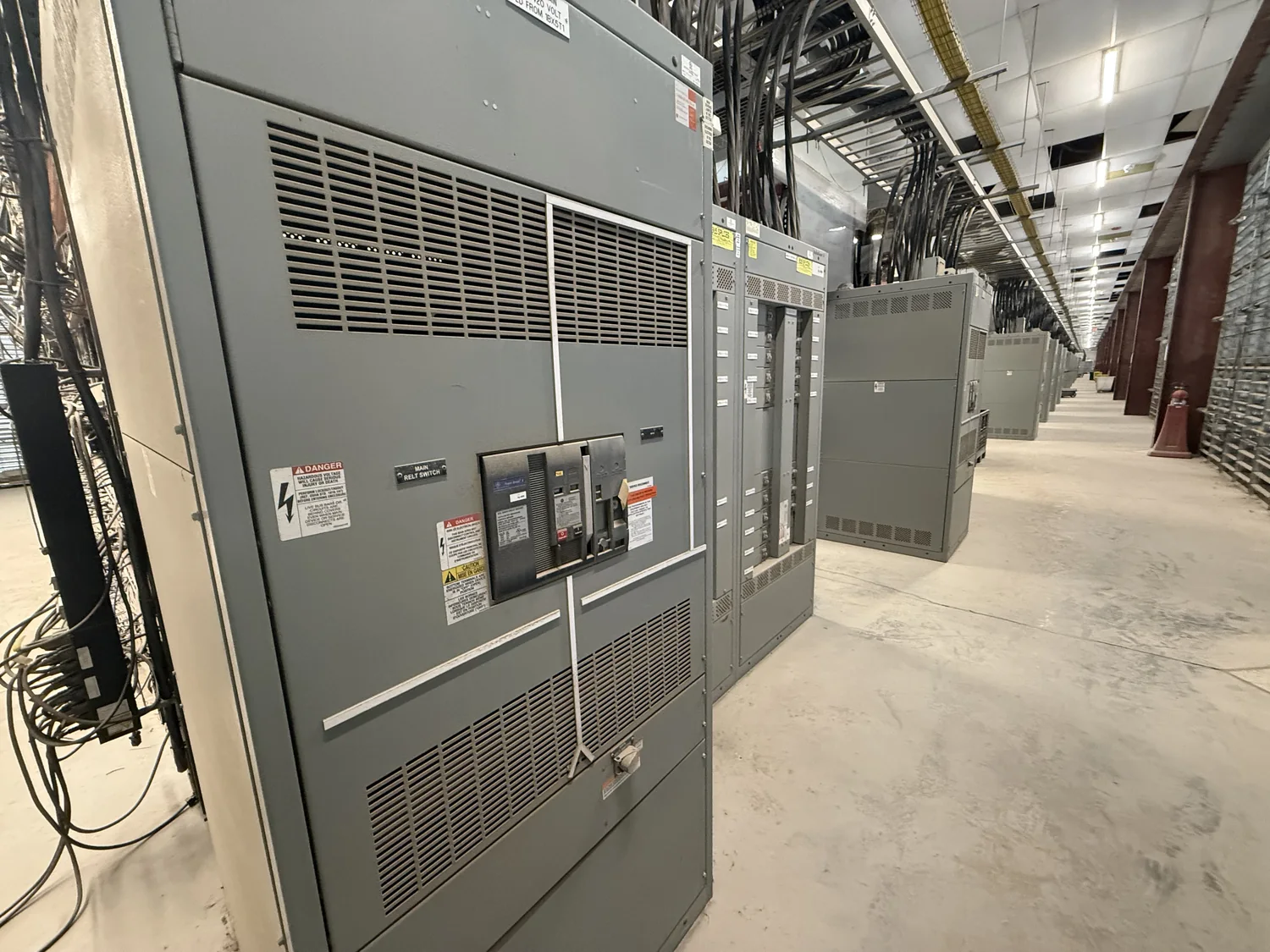
Switchgear condition documentation: a practical seller’s guide
If you are preparing switchgear for sale in Washington, DC, Northern Virginia, or Maryland, clear condition documentation can help a buyer understand what is on site and what review is still needed. It does not have to be a formal inspection report. A useful first package typically combines readable nameplate photos, overview and detail images, lineup dimensions, an inventory of included sections or components, and basic information about ownership and site access.
This guide is for sellers considering an equipment sale. The buyer buys switchgear and may make a cash offer; the business does not sell equipment. No testing is required from the seller. The buyer considers all voltage classes, but a specific offer depends on review of the equipment and the project information. Documentation supports that review; it does not guarantee an offer or establish a final price on its own.
Start with safe, useful photographs
Take photos from locations you can reach safely without opening energized compartments, removing covers, or entering restricted areas. Begin with a wide view of the lineup and its surroundings, then capture each accessible section from the front. If safely accessible, include side and rear views, visible identification labels, and any external signs of wear, corrosion, impact, water exposure, missing parts, or prior modification. Photograph observations as they are; do not clean, repair, or dismantle equipment simply to improve its appearance for the pictures.
Close, sharply focused nameplate images can be especially helpful. Include the overall equipment identification and any readable rating or section labels, while avoiding unsupported assumptions about the equipment’s history or condition. If text is worn, blocked, or difficult to read, note that rather than guessing. A few well-framed images that show both the complete lineup and relevant details are generally more useful than a large set of repetitive or blurry photographs.
Do not remove barriers or approach equipment that site personnel have not cleared for photography. De-energization, isolation, and disconnect work must be performed by qualified personnel under the facility’s safety and outage procedures. Photography and information gathering should be coordinated with the site contact so they do not interfere with operations or create an electrical hazard.
Record lineup dimensions and what is included
Provide approximate overall lineup dimensions and, if known, the dimensions of individual sections. Note the lineup’s configuration and the number of sections, along with any visible auxiliary cabinets or separately located components that are part of the proposed sale. A simple sketch with measurements can help explain the layout when a continuous photo is impractical. Identify whether dimensions are approximate and describe any obstructions that make measurement difficult.
Make a straightforward list of what you believe is included: for example, the main lineup, identified sections, and loose components or accessories stored with it. Note anything that appears absent, separated, damaged, or uncertain. Do not infer that a component is present or complete based only on a label or an old drawing. If available, share equipment schedules, drawings, maintenance records, or prior inventory documents as supporting material, and flag documents that may no longer match the installed equipment.
Completeness can affect both evaluation and removal planning. The buyer will need to understand whether the proposed sale covers a complete lineup or selected equipment, and whether anything at the site is excluded. When ownership, boundaries, or the identity of loose items are unclear, resolve those questions with the responsible asset owner before the scope is set.
Include ownership, access, and removal details
Along with photos and dimensions, provide the facility or site location, a suitable project contact, and confirmation that the person arranging the sale has authority to offer the equipment. Share any known timing needs, outage windows, access restrictions, loading-area constraints, and site rules that could affect a visit or removal. In the DC region, arrangements may need to account for the specific facility’s access process, scheduling, and available routes for moving equipment; those details must be confirmed for the actual site rather than assumed from its city or county.
Describe the route from the equipment to the loading area as far as you know it. Relevant facts may include doorway or corridor limits, stairs, floor or dock access, overhead obstructions, turning space, parking or staging limitations, and whether the equipment is installed at an elevated or difficult-to-reach location. Note if the lineup is anchored, integrated with adjacent equipment, or otherwise subject to removal constraints. Do not attempt to move, disconnect, or prepare heavy electrical equipment yourself unless you are qualified and authorized to do so.
Removal responsibilities should be confirmed before work is scheduled. Subject to project arrangements and site access, the buyer handles crane, rigging, disconnects, loading, freight, and hauling. The exact work sequence, access, timing, and responsibilities still need to be coordinated with the site. Disconnects and any de-energization or isolation must be handled by qualified personnel in accordance with the site’s safety and outage procedures. The seller should identify site requirements and coordinate access, not perform work beyond its authorization or qualifications.
What happens after documentation is shared
A buyer can use the documentation to decide what questions remain, whether a site review is appropriate, and what project assumptions need confirmation. A review may consider visible condition, readable identification, lineup configuration, completeness, ownership, and the practical effort required to access and remove the equipment. Photos and records are useful inputs, not substitutes for whatever review the buyer considers necessary. No seller testing is required, and sellers should not energize, operate, or dismantle equipment to provide additional evidence.
Share clear, current information and identify any gaps openly. If a nameplate cannot be read, a dimension is estimated, or an accessory’s inclusion is uncertain, label it accordingly. If equipment condition has changed since the photographs were taken, provide updated images. The buyer may ask follow-up questions because condition, scope, access, and removal constraints can affect the evaluation. An offer should not be treated as final until the buyer has reviewed the relevant details and confirmed the project scope; no price can be established from the guide alone.
When an offer is accepted, payment is arranged upfront. The buyer can make cash offers, and payment is made upfront upon acceptance, with transaction and removal arrangements confirmed for the specific project. Before work begins, confirm what equipment is included, how the site will be accessed, who will coordinate qualified disconnect work, the schedule, and the buyer’s responsibilities for crane, rigging, loading, freight, and hauling. A complete documentation package helps the parties plan, but neither a particular offer nor a removal date is guaranteed until the details have been reviewed and agreed.