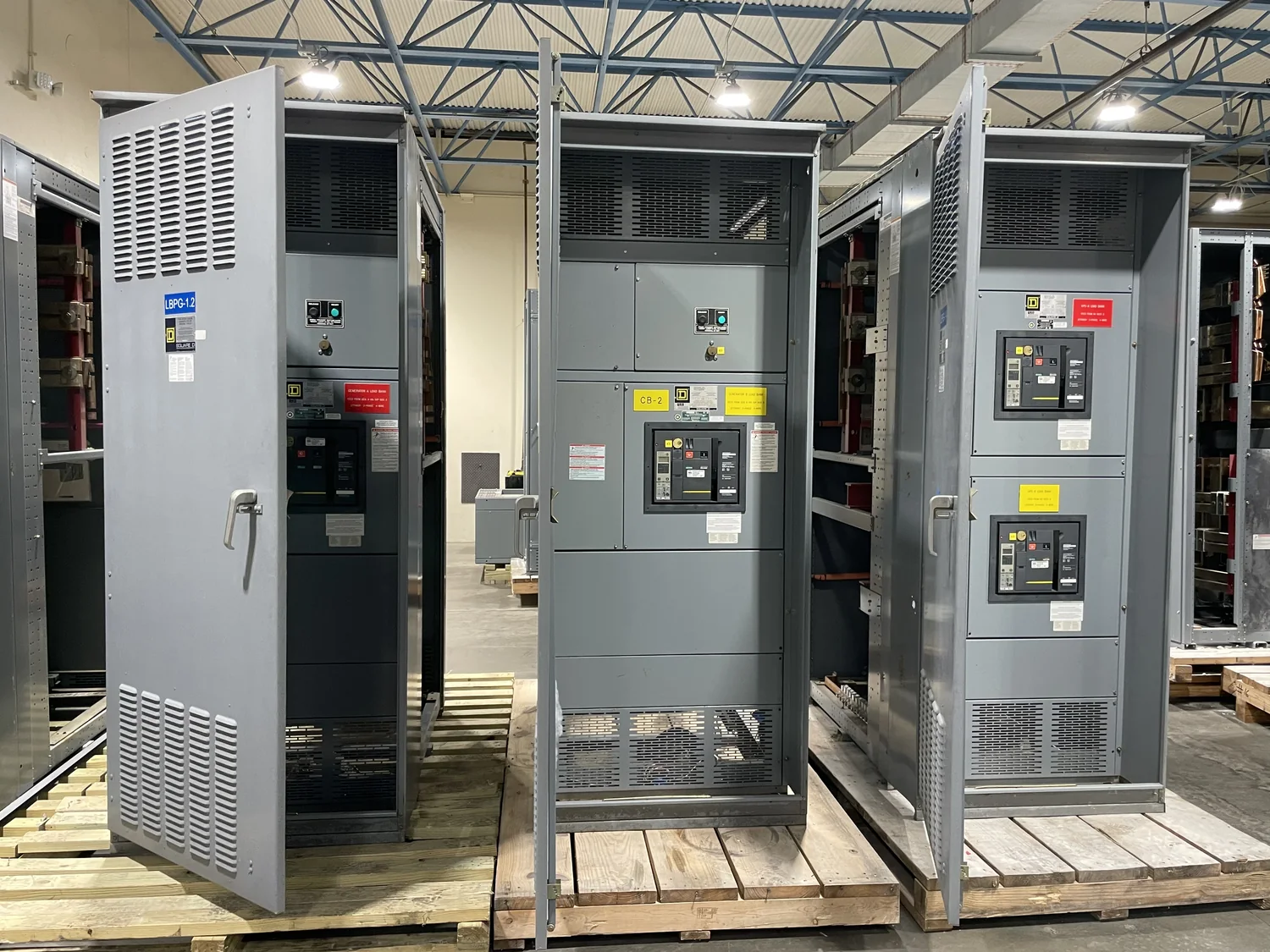
Switchgear decommissioning logistics in the Washington, DC region
Planning to remove switchgear from a commercial, institutional, industrial, or utility-related site involves more than arranging a truck. The equipment must be identified, made safe, evaluated for removal, and moved through a facility without conflicting with outage plans, site rules, or other work. For sellers in Washington, DC, Northern Virginia, and Maryland, access conditions and scheduling can vary from one property to another, so the removal plan should be built around the actual equipment and site rather than assumptions about the region.
This buyer purchases switchgear; it does not sell equipment or provide a general electrical-contractor scope. It considers equipment across all voltage classes, and no seller testing is required. The buyer can make a cash offer and, when an offer is accepted, arranges payment upfront. The buyer handles crane, rigging, disconnects, loading, freight, and hauling, subject to project arrangements and site access. Responsibilities, timing, and access need to be confirmed before removal. A final offer or removal scope cannot be set from the equipment category alone; it depends on review of the specific assets and logistics.
Start with clear equipment information
Send clear photos of the switchgear lineup, including full-front and full-side views where safely accessible, along with close-ups of each available nameplate. Images should be legible enough to help identify the equipment and its configuration. Do not remove covers or enter restricted areas to obtain photographs. If a nameplate is missing, damaged, or unreadable, note that rather than attempting to infer its details.
Provide the lineup’s approximate overall dimensions: length, height, and depth. Include the number of sections or cubicles, visible accessories, and any separate components believed to be part of the equipment. If available, share documentation such as an equipment list or drawings, but do not delay an initial inquiry solely because records are incomplete. The buyer can review what is provided and ask follow-up questions where details affect identification, handling, or valuation.
Useful nameplate and documentation details may include manufacturer, model or catalog identifiers, ratings, and other markings shown on the equipment. Share only information you can verify from labels or records; do not guess at voltage, interrupting ratings, or configuration. The buyer considers all voltage classes, but that does not remove the need to identify the actual equipment as accurately as possible before making an offer or planning removal. Photos, dimensions, ratings, and completeness help establish what is being considered and what work may be involved.
Confirm ownership, completeness, and site authority
Before discussing removal, establish who owns the switchgear and who is authorized to approve its sale and release. If the equipment belongs to a tenant, landlord, contractor, lender, public entity, or another party, clarify who can authorize the transaction and coordinate access. Ownership and release authority should be settled before equipment is scheduled for removal; a site contact’s ability to grant entry does not necessarily establish authority to sell the assets.
Describe whether the lineup is believed to be complete or whether sections, breakers, doors, covers, bus components, control devices, or other parts are missing or have already been removed. Mention attached or adjacent equipment that may need to be separated from the sale scope. Do not assume that loose components or nearby material are included; identify them clearly and agree on what is included before removal. Completeness and condition may affect the buyer’s review and the practical removal plan, but photos alone may not resolve every question.
Also identify any known restrictions on moving the equipment: narrow doors, low ceilings, stairs, elevators, loading docks, limited turning space, weight or floor-loading concerns, overhead obstructions, or limits on vehicle access. These are examples to check, not assumptions about a particular DC-area property. Share site rules for contractor access, delivery windows, escorts, security screening, parking, and work hours if they apply. The buyer’s ability to arrange lifting and transportation remains subject to the actual route, access, and project arrangements.
Coordinate safe de-energization and removal
De-energization, isolation, and electrical disconnection must be handled by qualified personnel under the site’s safety procedures, lockout and isolation requirements, and outage plan. Do not ask unqualified staff to open, disconnect, move, or otherwise handle electrical equipment. The buyer handles disconnects as part of the agreed project arrangements, but that does not replace the site’s responsibility to coordinate safe work, establish authority, and make required outage and access arrangements. Agree in advance who is responsible for each step and when it can occur.
Removal timing should account for the facility’s operating needs and any planned outage, shutdown, renovation, or equipment replacement. A workable sequence may depend on when the switchgear can be made available, whether adjacent systems remain in service, and when qualified personnel and site representatives can authorize the work. Those details are project-specific. Confirm the proposed work window, site contact, access route, and any required coordination before locking in a removal date.
The buyer handles crane, rigging, loading, freight, and hauling, with the scope and responsibilities confirmed before removal. Whether a crane or a different handling approach is suitable depends on the equipment, lifting points, available working space, route, and site restrictions. The seller should provide accurate access information and coordinate site permissions; the buyer’s logistics plan must be based on what the site can safely accommodate. No particular lifting method or schedule should be assumed before the equipment and conditions are reviewed.
Offers, payment, and a practical next step
To request a review, send the equipment photos and nameplates, lineup dimensions, available ratings or records, an inventory of included sections and components, ownership and sale-authority details, and a description of access and removal constraints. Include the site’s general location in the Washington, DC, Northern Virginia, or Maryland service area and any known scheduling limitations. Clear, complete information can help the buyer assess the equipment and discuss the logistics; follow-up questions or an additional site review may still be needed.
The buyer may make a cash offer after reviewing the specific equipment and relevant project details. There is no requirement for the seller to test the switchgear. If an offer is accepted, payment is arranged upfront. The buyer pays the crane, rigging, loading, freight, and hauling costs, with the exact responsibilities and arrangements confirmed before removal. Do not treat a preliminary discussion as a final price, confirmed schedule, or unconditional removal commitment; those depend on review, accepted terms, and workable site access.
A useful first message is straightforward: identify the lineup, attach clear photos and nameplates, provide approximate dimensions, state what is included and what may be missing, confirm ownership and authority to sell, and describe the access route and any removal restrictions. Add the preferred timing and the facility’s coordination requirements. With those details, the buyer can review the opportunity, ask for any missing information, and discuss an offer and removal plan without assuming facts about the facility or its electrical system.