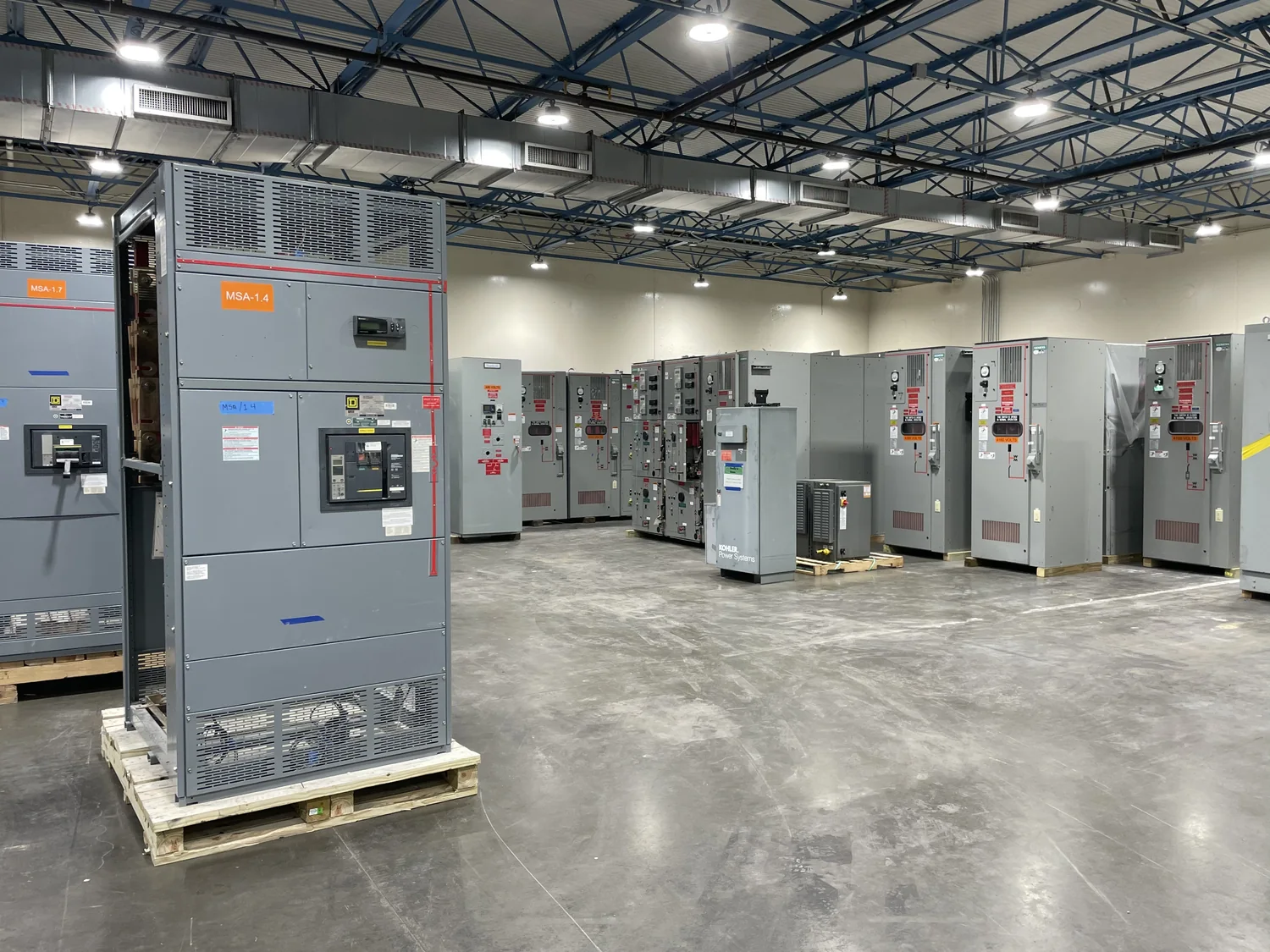
Switchgear salvage before demolition: plan the decision early
When a facility in Washington, DC, Northern Virginia, or Maryland is preparing for demolition, switchgear salvage may be worth evaluating before the building schedule makes the equipment difficult to access. The first step is not to assume the lineup has resale value or that it can be removed intact. It is to share enough information for a buyer to review the equipment, understand the site constraints, and decide whether to make an offer before demolition work begins.
This is a buying service, not a sales channel. The buyer considers switchgear across all voltage classes, and the seller does not need to test the equipment before submitting it for review. A cash offer may be made after the available information is assessed. If the offer is accepted, payment is arranged upfront; the offer and payment terms should be agreed before removal is scheduled. No final price can be responsibly stated from the equipment category alone, because condition, completeness, access, removal effort, and project timing can all affect the review.
In a demolition project, salvage planning has to fit alongside abatement, utility coordination, structural work, and the general-contractor schedule. Those activities may be governed by project-specific contracts and site rules, so establish who controls the work area, who can authorize access, and when equipment can be approached. A planned review before the demolition sequence is fixed can help identify practical options without promising that the lineup will be accepted or removed.
Prepare a useful equipment package for review
Clear photographs and readable nameplate images help start the review. Photograph the overall lineup from more than one angle, the front and rear where accessible, individual sections, visible labels, and any obvious damage or missing components. Nameplates may show manufacturer, model or catalog identifiers, ratings, and other identifying information. Do not remove covers or enter restricted areas to get a picture; use only views that can be obtained safely under the site’s access procedures.
Provide approximate lineup dimensions, including overall length, height, and depth, and note whether the equipment is arranged in a single run or in multiple sections. If available, describe the configuration and identify any attached or related components being considered with it. Completeness may matter: note whether doors, breakers, sections, internal parts, bus components, or accessories appear to be present, absent, or separated. These are observations for initial evaluation, not a request for the seller to inspect energized equipment or certify its condition.
Include the facility location at a practical level, the project contact, the seller’s role, and the proposed demolition or removal window. State whether the equipment is owned by the seller or whether another party must approve its disposition. If ownership, title, lease, utility, lender, or contractor responsibilities are unclear, resolve the authorization question before agreeing to a sale. The buyer needs to understand that the person arranging the transaction has authority to offer the equipment for sale and coordinate its release.
A concise package can include photos, nameplate details, dimensions, an inventory or one-line description if already available, ownership and authorization information, and site-access notes. Share what is known and identify what remains uncertain. Avoid guessing at ratings or completeness. A buyer can ask follow-up questions after reviewing the materials, and scope should remain subject to that review rather than being inferred from a single photo or a general equipment description.
Coordinate safety, access, and removal responsibilities
Switchgear may be connected to electrical systems even when a demolition project is underway. De-energization, isolation, verification, and disconnect work must be handled by qualified personnel under the facility’s safety procedures and outage plan. Do not ask unqualified staff, demolition laborers, or the equipment buyer’s crew to perform electrical disconnects unless they are qualified and specifically authorized for that work. The seller and site team should determine who is responsible for electrical work and confirm the required sequence before physical removal is scheduled.
The buyer handles crane, rigging, disconnects, loading, freight, and hauling, subject to project arrangements and site access. Because electrical disconnect work must be performed by qualified personnel, the specific personnel, scope, authorization, and coordination for that work must be confirmed for the project. The buyer’s logistics responsibility does not override facility rules, permit or contractor requirements, outage procedures, or the need to coordinate with the site’s responsible parties. Confirm responsibilities in writing before removal so that the parties share the same understanding of what is included and what must be arranged at the site.
Access conditions can determine whether a proposed removal plan is feasible. Share the route from the equipment to the loading area, door and corridor clearances, floor or loading limitations if known, overhead restrictions, staging space, available working hours, security or escort requirements, and any limits on truck or crane placement. Note whether equipment is on an upper floor, in a basement, behind other equipment, or located where demolition work may soon restrict access. These facts help the buyer assess the likely handling approach without making assumptions about the building.
Crane and rigging plans depend on the actual equipment, route, lifting points, surrounding structure, and site rules. Do not assume a lineup can be lifted as one piece, moved through an existing opening, or extracted without affecting nearby construction. The buyer can review the removal details with the project team, while the site retains responsibility for access authorization and its safety and outage procedures. Agree on who supplies required site coordination, how timing is confirmed, and what happens if access or conditions differ from the information provided.
Fit the transaction to the DC-region project schedule
Washington, DC, Northern Virginia, and Maryland projects can involve tightly coordinated access, delivery windows, security controls, and multiple contractors. These are planning considerations, not assumptions about a particular facility. Share the actual site rules and timing constraints rather than relying on general expectations about the region. If the facility has restricted access, limited staging, specified work hours, or advance notice requirements, identify them early so the buyer can evaluate whether the proposed removal window is workable.
Demolition schedules often move as approvals, utility work, or site conditions change. Give the buyer the current target date and the date by which the equipment area may become inaccessible, while distinguishing confirmed deadlines from tentative ones. Allow time to review the information, clarify scope, agree on an offer, confirm payment arrangements, and coordinate safe access. A short turnaround may be possible only if the parties can complete those steps and the site can support the work; no schedule should be treated as guaranteed before it is confirmed.
Before accepting an offer, confirm what equipment is included, what must remain in place, the agreed payment timing, and the planned removal window. Also document the division of responsibilities for disconnects, crane and rigging, loading, freight, hauling, and site coordination. The buyer pays those removal and transportation costs, with responsibilities confirmed before removal. If the scope changes—for example, if additional sections are included or the access route changes—pause to review the effect on the arrangement rather than assuming the original terms automatically cover it.
A straightforward next step for sellers
To request a review, send clear equipment and nameplate photos, approximate lineup dimensions, any available identifying or inventory information, and a plain description of completeness and visible condition. Include the equipment’s location, your ownership or authorization status, the demolition schedule, the access route, site restrictions, and the person coordinating the project. You do not need to perform testing to submit the equipment for consideration, and you should not open, disconnect, or handle electrical equipment unless qualified and authorized to do so.
The buyer reviews the information and may request clarification before making a cash offer. Acceptance is the seller’s choice. If the offer is accepted, payment is arranged upfront, and the parties confirm the equipment scope, access, timing, and removal responsibilities before work begins. The buyer handles the crane, rigging, disconnects, loading, freight, and hauling costs, subject to the project arrangements and site access. That practical review is the basis for deciding whether switchgear salvage can fit the demolition plan; it is not a guarantee of purchase, price, or removal date.