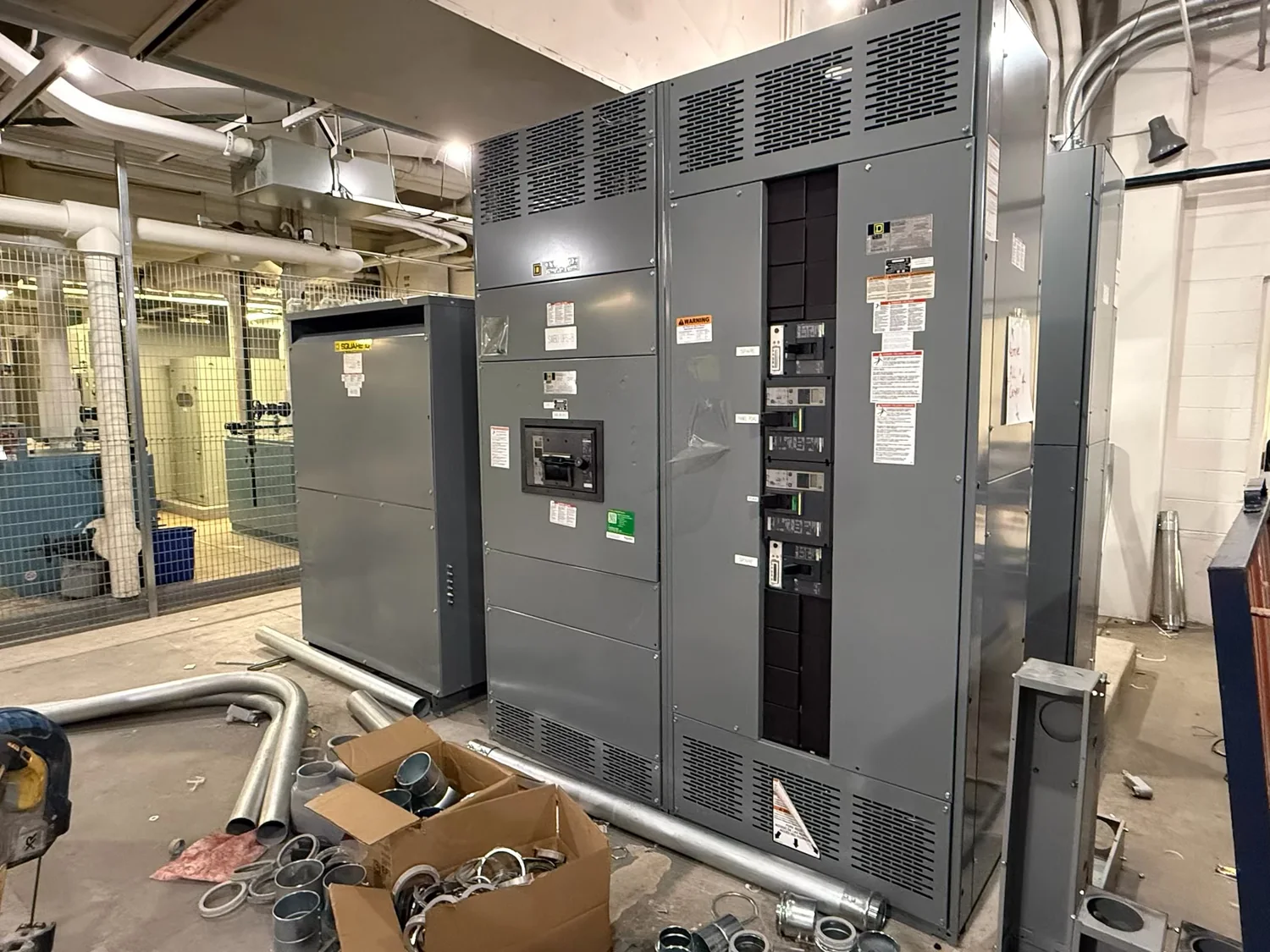
Switchgear Disconnection Coordination for Sellers
Selling switchgear involves more than identifying equipment and agreeing on a purchase. Before removal can be scheduled, the parties need to understand what is included, who owns it, how it can be reached, and what the facility requires for safe disconnection. For equipment in Washington, DC, Northern Virginia, or Maryland, those details can shape the project timeline as much as the equipment itself. Building access, work windows, loading routes, and coordination with facility staff all need to be reviewed for the particular site; they should not be assumed from the location alone.
We buy switchgear and can make a cash offer after reviewing the available information. If you accept an offer, payment is arranged upfront. The seller is not required to test the equipment. We consider all voltage classes, but a final offer depends on reviewing the equipment and the proposed removal arrangements. Our role is to buy the equipment, not to sell it or to replace the facility’s qualified electrical and safety personnel. This guide explains what sellers can prepare and how to coordinate the handoff without asking unqualified personnel to disconnect or handle electrical equipment.
Start With Identification, Ownership, and Clear Photos
Send clear, well-lit photos of the switchgear, including the full lineup and its surroundings, as well as close-ups of each visible nameplate. A nameplate may help identify the manufacturer, model or type, serial number, ratings, and other markings, but do not guess at unreadable information or remove covers to obtain a photograph. A wider view can show how sections are arranged and where the lineup sits in the room; detail images can help show condition, labels, and whether doors, panels, or other components appear to be present. Photos support an initial review, but they do not replace an on-site assessment when one is needed.
Include the lineup’s approximate overall dimensions—height, width, and depth—and, if available, the dimensions of individual sections. Note whether the equipment is a complete lineup or whether parts have already been removed, separated, or set aside. Identify included items such as breakers, draw-out units, or accessories only when you can do so reliably. Also explain what is excluded. Completeness and configuration can affect how the equipment is evaluated and how removal is planned; a photo alone may not show whether a component is included, operable, or merely stored nearby.
Confirm who owns the equipment and who is authorized to approve its sale and removal. If it belongs to a landlord, tenant, contractor, utility, or another organization, identify the appropriate decision-maker and any ownership documentation or internal approval that may be required. Clear ownership matters before a transaction proceeds. Share a contact who can answer questions about the equipment and a separate site contact if access or work scheduling is managed by another team. These details help prevent avoidable delays once an offer is under consideration.
Qualified Disconnection and Facility Coordination
De-energization, isolation, and disconnection must be performed by qualified personnel under the site’s safety requirements and outage procedures. Sellers should not ask unqualified staff to open, disconnect, move, or otherwise handle switchgear. Coordinate with the facility’s responsible electrical and safety personnel to determine what work must occur, who is authorized to perform it, what approvals or outage windows apply, and when the equipment can be released for removal. The buyer’s review does not substitute for the site’s procedures or determine whether the equipment is safe to work on.
Before setting a removal window, clarify whether the equipment is still connected, whether the facility plans to disconnect it before the buyer arrives, and how completion of that work will be communicated. Confirm any site-specific requirements for check-in, escorts, contractor access, work hours, protective equipment, insurance documentation, or loading operations directly with the responsible facility contacts. Requirements vary by project, so they should be confirmed rather than assumed. Scheduling should account for the facility’s approved outage and access windows as well as the time needed to prepare the equipment and loading area.
The seller and buyer should agree on the equipment handoff point and condition before removal. Discuss whether the lineup will be left in place after qualified disconnection, whether components are to remain assembled, and whether any loose parts or documentation are included. Do not dismantle or alter equipment simply to make it easier to photograph or move; first coordinate the proposed scope with the buyer and the personnel responsible for the site. A clear, project-specific scope helps both sides understand what is being purchased and what will be available when removal begins.
Access, Rigging, Loading, and Hauling
The buyer handles the crane, rigging, disconnects, loading, freight, and hauling, subject to the project arrangements and site access. Responsibilities and the practical scope of the work must be confirmed before removal. Disconnect work remains subject to qualified personnel and the facility’s safety and outage procedures; do not interpret the buyer’s responsibility for project logistics as permission for unqualified people to perform electrical work. Depending on the arrangement, timing and coordination may involve the facility’s authorized personnel and other site representatives.
Describe the route from the equipment location to the loading area. Useful details include door and corridor clearances, turns, stairs or ramps, elevator dimensions and capacity if relevant, floor or access restrictions, overhead obstructions, and the distance to the truck or staging area. Share known limits on truck access, loading-bay use, parking, delivery entrances, or time-of-day access. If a crane or other lifting arrangement may be required, note potential staging constraints and any known restrictions around the building. Do not assume a crane can reach the equipment or that a planned route will accommodate a particular load; the removal plan needs review against the actual site conditions.
Let the buyer know about constraints that could change the removal sequence, such as limited access windows, shared loading areas, restricted routes, nearby operations, or a need to coordinate with building management. Provide accurate information where available and flag anything uncertain for confirmation. Site access and timing may affect the schedule, equipment needed, and scope of coordination. A preliminary discussion is not a guarantee that a particular method or date will work; those details depend on the equipment, project arrangements, and confirmed site conditions.
Information to Share Before an Offer and Removal Plan
For an initial review, send the equipment photos and nameplates, approximate lineup and section dimensions, a description of what is included or missing, and any available information about ratings. Add the equipment location within the facility, ownership and sale authority, site and loading access details, known removal constraints, and the contact responsible for coordinating access. If the equipment is already disconnected, state who performed that work and whether the site has cleared it for removal. If disconnection is still pending, identify the qualified personnel and facility process responsible for coordinating it; do not provide a guessed completion date as though it were confirmed.
The buyer can review this information and make a cash offer when there is enough detail to assess the equipment and project scope. No final price should be assumed from a brief description or a single photograph. If you accept the offer, payment is arranged upfront, and the parties confirm responsibilities and removal arrangements before the equipment is taken away. The seller does not need to test the switchgear to request a review. Be candid about unknowns, incomplete sections, or access questions so they can be resolved before scheduling rather than during a removal window.
For sellers across Washington, DC, Northern Virginia, and Maryland, the practical next step is to gather the identification, ownership, access, and scheduling information in one place and share it for review. Then coordinate any required disconnection through qualified personnel and the facility’s established procedures. Once scope, payment, access, timing, and removal responsibilities are discussed and confirmed for the particular project, the buyer can plan the crane, rigging, loading, freight, and hauling with the site.