Switchgear Lineup Inventory Purchase Guide
If your organization is planning a facility change, equipment replacement, or surplus-asset review, a switchgear lineup may be worth presenting for purchase. This guide is for sellers in Washington, DC, Northern Virginia, and Maryland who want to understand what information helps an equipment buyer assess a lineup and plan a possible removal. The buyer purchases equipment only; it does not offer replacement gear for sale, and this page does not assume that a particular lineup is suitable for reuse or has a predetermined value.
A useful first step is to describe the lineup as it exists today rather than trying to estimate its market value or dismantling scope. Switchgear is often assembled from connected sections, and the overall lineup may include different compartments, controls, bus arrangements, or auxiliary components. The exact configuration, condition, completeness, ownership, and removal circumstances all affect whether the buyer can make an offer. A review of the available details is needed before scope, timing, or price can be determined.
What to gather before requesting an offer
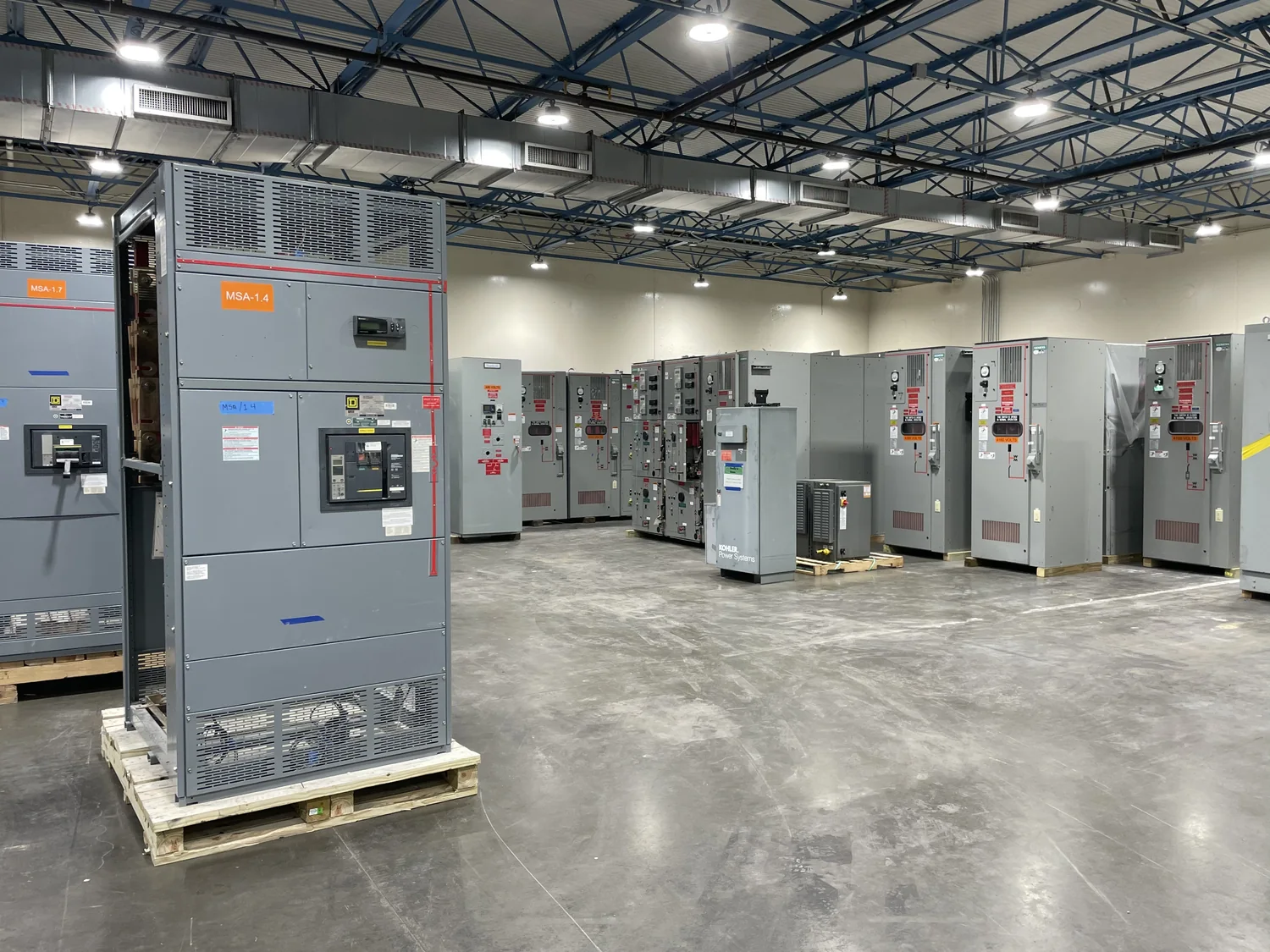
Send clear photographs of the full lineup and its surroundings, along with close views of each accessible nameplate and section label. Images that show both the front and sides can help communicate the arrangement; photographs of rear access, overhead obstructions, doorways, and the route out of the building can be useful when safely available. Do not open energized equipment, remove covers, or enter restricted areas to take pictures. Follow facility rules and have qualified site personnel determine what can be photographed safely.
Nameplate details may help identify the equipment and its configuration. Share visible manufacturer and model information, catalog or serial numbers, ratings, and other markings as recorded on the equipment. Include the number of sections, overall lineup dimensions, approximate section widths and heights, and any known weight information if documented. Do not guess at ratings or infer specifications from appearance; note when a marking is unreadable or information is unknown. The buyer considers all voltage classes, but a review of the actual equipment is still necessary.
Describe what is included with the lineup. Depending on the installation, relevant items may include breakers, drawout units, relays, meters, control components, bus links, transition sections, or associated accessories. List known missing, damaged, modified, or separately stored components, and distinguish equipment that is part of the proposed sale from items that will remain at the facility. If records, drawings, or an inventory are available, they may help clarify completeness, but no seller testing is required.
Ownership, condition, and project context
Confirm who owns the equipment and who has authority to approve its sale and removal. If the lineup is leased, financed, held for another party, or subject to internal asset controls, resolve the applicable approval and ownership questions before committing to a transaction. A buyer’s review does not establish title or replace the seller’s responsibility to confirm that it can transfer the equipment.
Share the known operating and storage history only to the extent it is documented. For example, explain whether the lineup is installed, decommissioned, stored, partially dismantled, or missing sections, and identify visible damage or known exposure to water, fire, contamination, or other events. Avoid describing equipment as tested, serviceable, or suitable for a particular application unless that statement is supported by records. The seller is not required to perform testing for the purchase review; the buyer can consider the information provided and determine whether it can make an offer.
A practical inventory also explains the project timeline. Tell the buyer whether a planned outage, renovation, replacement, sale of a facility, or other milestone affects when the equipment might be available. Dates are subject to coordination: the equipment must be accessible, site requirements must be understood, and any required disconnection and removal work must fit the facility’s procedures. An early conversation can help identify missing information before a target removal window becomes difficult to change.
Access, disconnection, and removal planning
Removal planning depends on the actual site and lineup, not just the equipment’s nameplate. Provide the facility location at the level needed to discuss the project, building and room access, loading-area constraints, available working hours, and any escort, badging, security, or scheduling steps that may apply. For sites in the DC region, access and coordination can vary by property and project; do not assume a particular loading route, staging area, or removal window until the site details have been reviewed.
The buyer handles crane, rigging, disconnects, loading, freight, and hauling, subject to project arrangements and site access. Responsibilities, work sequence, access conditions, and timing should be confirmed before removal. The buyer pays all crane, rigging, loading, freight, and hauling costs as described for this purchase route, with the detailed arrangements confirmed for the project. That does not remove the need to coordinate site-specific requirements, including any arrangements needed to make the equipment safely available.
De-energization, isolation, and electrical disconnect work must be performed by qualified personnel under the site’s safety procedures and outage requirements. Do not ask unqualified staff to disconnect, open, move, or otherwise handle switchgear. Coordinate the required qualified personnel, approvals, outage timing, and access with the facility before a removal date is set. The buyer’s handling of removal logistics does not authorize anyone to bypass the site’s safety controls.
Offer review and payment
Once the buyer has reviewed the photos, nameplates, dimensions, completeness, ownership information, and access details, it can determine whether it is prepared to make an offer. An offer is not established by a general equipment description alone, and no final price can be stated without reviewing the specific lineup and project circumstances. The assessment may depend on the equipment presented, what is included, its condition, and whether removal can be arranged under the site’s constraints.
If an offer is made and accepted, payment is arranged upfront. Confirm the agreed scope, payment arrangement, removal responsibilities, and project timing before work is scheduled. The seller does not need to test the equipment to request consideration. Clear documentation and realistic access information make it easier to evaluate the inventory and discuss next steps, while leaving room to address site-specific requirements before the transaction and removal proceed.