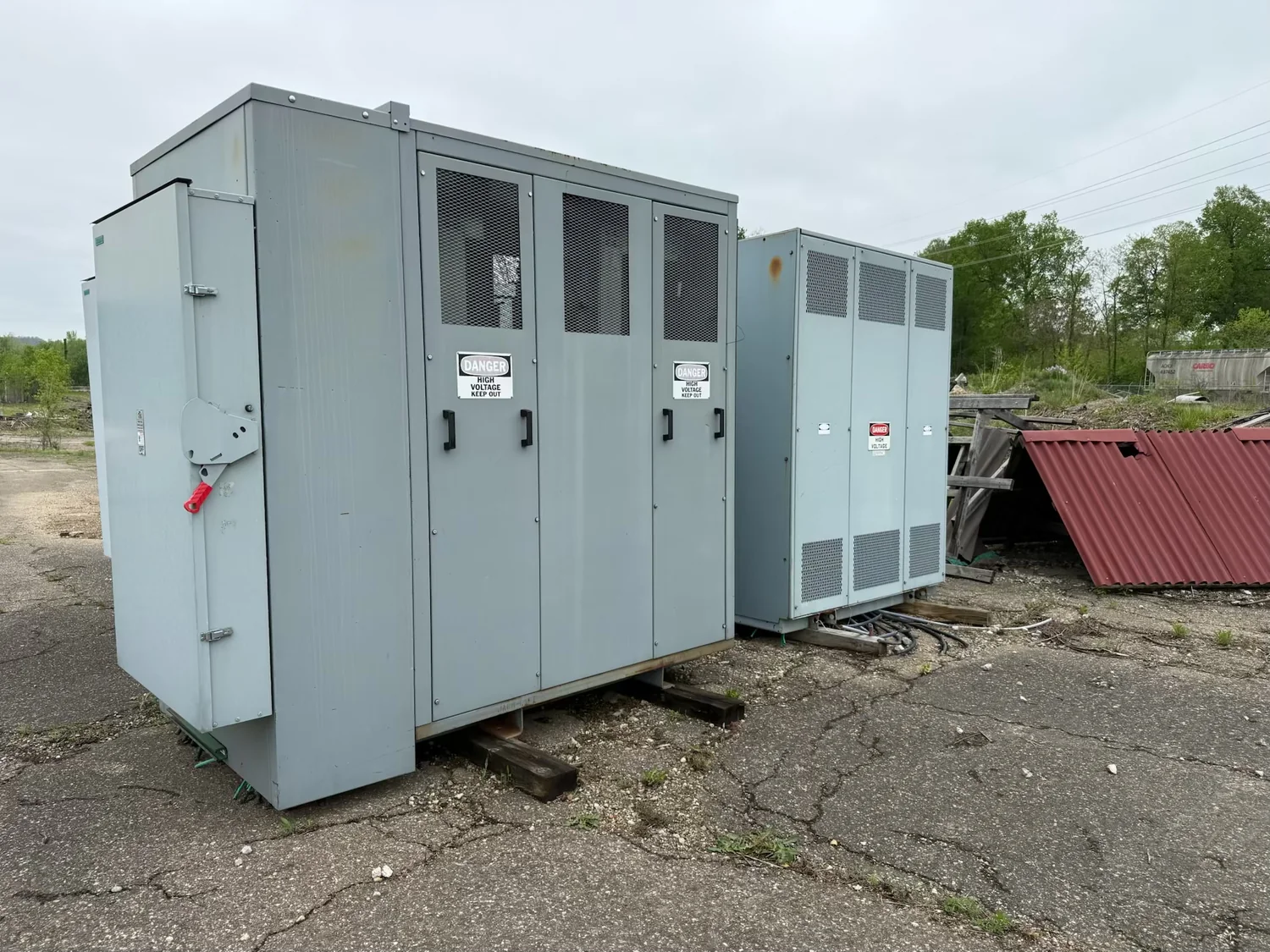
Switchgear Loading Dock Review: Start With the Removal Route
A switchgear loading dock review is a practical assessment of whether an existing lineup can be safely and efficiently moved from its installed location to a suitable loading point. For sellers in Washington, DC, Northern Virginia, and Maryland, the review helps identify the equipment, the route out of the building, and the arrangements needed before removal is scheduled. It is an evaluation for a potential purchase—not a commitment to buy or a final price.
Loading-dock conditions can shape the project as much as the switchgear itself. The review may need to account for the distance between the equipment and dock, door and corridor clearances, floor transitions, elevator or ramp restrictions, overhead obstructions, staging space, and the approach available for a truck or lifting equipment. Conditions vary by site, so no particular access arrangement should be assumed from the location alone. Share what is known and flag any constraints that need an on-site or project-specific review.
Information to Share Before Scope Is Set
Clear photographs are a useful starting point. Send overall views of each lineup, close-ups of nameplates and readable labels, and images showing connected sections, bus or cable entry points, surrounding walls, and the path toward the loading dock. Include the lineup’s approximate overall length, height, and depth, along with any available section dimensions. Measurements help assess whether equipment can pass through doors and turns or will require a different removal sequence. If exact dimensions are unavailable, say so rather than estimating precision you cannot confirm.
Nameplate details and ratings can help identify what is being offered and how the equipment is configured. Include the manufacturer and model information visible on the plates, voltage and other legible ratings, section or lineup identifiers, and any available equipment schedules or records. The buyer considers all voltage classes, but the specific equipment and its condition, completeness, and practical removal requirements still need review. Do not remove covers or enter restricted areas just to obtain a photograph; follow site rules and use qualified personnel where access or inspection requires them.
Describe what is included in the proposed sale: for example, the switchgear lineup and any associated components or accessories you intend to offer. Note known missing sections, parts already removed, modifications, or items that are not included. Confirm that the seller has authority to transfer ownership and identify any ownership, lease, lien, or disposition approval questions that need to be resolved before a transaction. No testing is required by the seller. Photos and records can support an initial review, but they do not substitute for clarifying equipment identity, completeness, access, and removal scope.
Qualified Disconnection and Site Coordination
Switchgear must not be disconnected or handled by unqualified personnel. De-energization, isolation, verification, and disconnect work must be performed by qualified personnel in accordance with the site’s safety procedures and outage requirements. Coordinate the required outage window, approvals, work boundaries, and timing with the people responsible for the facility. The buyer’s review does not replace the site’s electrical-safety planning, and removal should not be scheduled until the responsibilities and sequence are understood.
Before scope is set, explain whether the equipment remains installed, has already been disconnected by qualified personnel, or is stored in another location. Identify any known connections, adjacent operating equipment, restricted work areas, or conditions that could limit the removal window. Site access details matter too: loading-dock hours, check-in procedures, escort requirements, truck restrictions, staging limits, and any building rules that affect lifting or transport. Share constraints early so the parties can coordinate a workable project plan rather than rely on assumptions.
Removal, Loading, Freight, and Payment
The buyer handles the crane, rigging, disconnects, loading, freight, and hauling, subject to project arrangements and site access. The parties should confirm the division of responsibilities before removal, including how qualified disconnect work will be coordinated, what equipment and route are required, when the loading area is available, and whether any site-specific restrictions affect the plan. Access, clearances, staging, lifting points, equipment condition, and the number or sequence of sections may all affect logistics. Do not attempt to move, lift, or disconnect switchgear yourself.
For a proposed purchase, the seller can provide the available information and request review; an offer depends on the specific equipment and project details. There is no guaranteed value or price based solely on a photo, voltage class, or general description. If an offer is accepted, payment is arranged upfront before removal. The buyer pays the crane, rigging, loading, freight, and hauling costs, with responsibilities and arrangements confirmed for the project before work begins.
A Practical Review Checklist for DC-Region Sellers
To begin, gather clear equipment and nameplate photos, approximate lineup dimensions, a description of what is included, and any records that help identify the asset. Add the ownership or disposition contact, the equipment’s current location, and a concise description of the route from its present position to the loading dock. Include known access limits, available work windows, loading-area rules, and removal constraints. If a detail is unknown, label it as unknown; a candid description is more useful than an unsupported assumption.
A loading-dock review is most effective when equipment information and site logistics are considered together. Sellers across the Washington, DC region—including Northern Virginia and Maryland—can share those details for review before a scope is set. The next step is to clarify what is being offered, confirm that the seller can transfer ownership, coordinate qualified personnel and site procedures, and agree on project responsibilities. Any purchase offer and removal plan should follow that review, with no final price or schedule promised in advance.