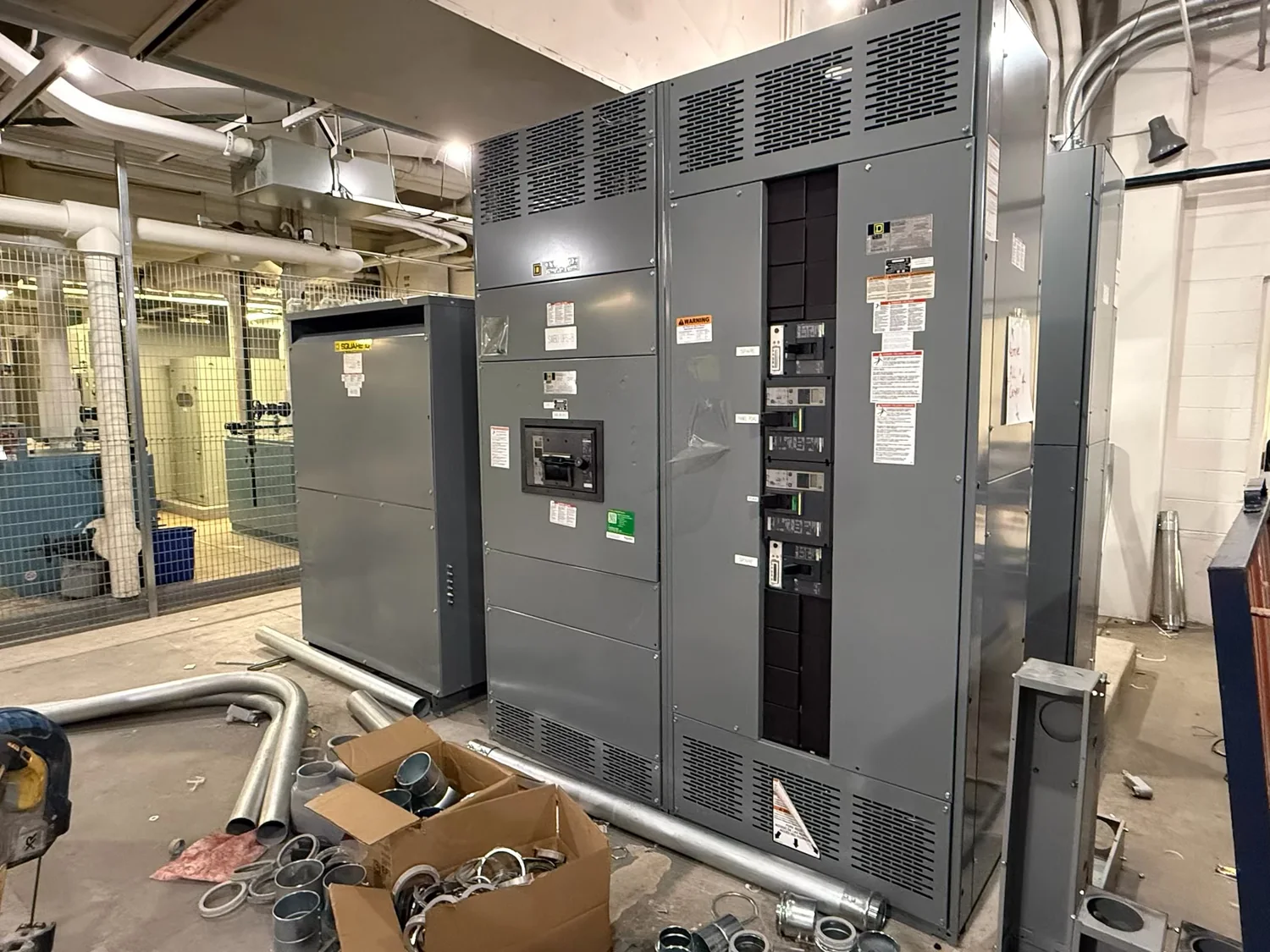
Switchgear ownership transfer in the Washington, DC region
Transferring ownership of switchgear is more than agreeing on a price. The parties need to identify the equipment accurately, confirm who has authority to transfer it, document the agreed terms, and coordinate a safe, workable removal plan. For facilities in Washington, DC, Northern Virginia, and Maryland, that planning should also account for the particular site’s access rules, operating schedule, and removal route. Conditions vary by facility, so the scope and timing should be established for the specific project rather than assumed in advance.
This guide is for organizations considering a sale of switchgear. The buyer buys equipment only; it does not sell switchgear. A seller can request an offer for equipment of any voltage class. No seller testing is required to begin a review, and the buyer can make a cash offer after reviewing the available information. If an offer is accepted, payment is arranged upfront, with the payment and transfer steps confirmed between the parties before removal.
Confirm the equipment and the right to transfer it
Start by establishing exactly what is included and who owns it. Gather the equipment’s nameplate information and clear photographs of the lineup, individual sections, labels, and any visible accessories or components. Include overall lineup dimensions, and note the number and order of sections where known. Nameplates and images help identify the equipment for review; dimensions help assess whether the proposed removal and transportation plan may be practical. If a nameplate is inaccessible or unreadable, say so rather than guessing at its contents.
The seller should also confirm its authority to sell the equipment. Switchgear may be owned by a facility operator, building owner, contractor, lender, or another party, and the organization offering it should make sure any required internal approvals or third-party consent are in place. Identify any liens, lease terms, ownership restrictions, or other conditions that could affect transfer, if applicable. The parties should put the agreed equipment description, price, payment timing, included components, and transfer terms in writing before the asset changes hands.
Clarify what is included in the proposed sale. Depending on the installation, that may mean a lineup, associated sections, separate components, or items removed from the equipment. Do not assume that loose parts, spare components, documentation, or adjacent electrical equipment are included unless both parties identify them in the written scope. Completeness can matter to the review, so describe missing, removed, damaged, or unknown items plainly. A buyer’s assessment is based on the information provided and review of the specific equipment; an initial discussion is not a final price or a guarantee of acceptance.
Prepare a useful information package
A clear first submission can reduce avoidable follow-up and help the buyer understand the proposed scope. Provide readable nameplate photos, wide and close-up views of the switchgear, lineup dimensions, and any available records that help identify the equipment and what is included. Add the installation location at the site, the quantity or lineup extent being offered, and whether the equipment is installed, disconnected, or otherwise staged for removal. Do not perform tests solely for a sale inquiry; seller testing is not required.
Include practical site and access information as well. Describe where the switchgear is located, the route from its current position to the loading area, door or corridor limitations, stairs or elevation changes, and any known restrictions on vehicle or lifting access. Note operating hours, building or facility procedures, scheduling windows, security or check-in requirements, and any outage coordination that could affect timing. These details are not a substitute for a site-specific assessment, but they help identify questions that should be resolved before a removal date is set.
If the equipment is still connected or located in an operating electrical area, state that clearly. De-energization, isolation, and disconnect work must be performed by qualified personnel in accordance with the site’s safety and outage procedures. Do not ask unqualified staff to disconnect, open, move, or handle electrical equipment. The responsible site parties should coordinate access, safe work conditions, and timing with the qualified personnel involved in the project.
Agree on removal scope, responsibilities, and scheduling
Removal plans depend on the actual equipment, its location, the building route, and available site access. Before work is scheduled, the parties should confirm what is being removed, what remains in place, how the equipment will be prepared for removal, and what conditions must be met before the crew arrives. Lineup dimensions, section configuration, clearances, floor or route constraints, loading location, and potential lifting requirements may all affect the plan. The buyer handles crane, rigging, disconnects, loading, freight, and hauling, subject to project arrangements and site access. Responsibilities and any site-specific requirements should be confirmed before removal.
The buyer’s handling of these logistics does not authorize work that conflicts with facility rules or safety procedures. Qualified personnel must perform de-energization, isolation, and disconnect work, and the project team must coordinate the necessary access and timing with the site. Confirm who will provide access, who will coordinate outage windows, what areas must be cleared, and whether the site imposes scheduling or operating constraints. If access or removal conditions change, the parties should revisit the plan rather than relying on assumptions made from photographs alone.
Washington, DC, Northern Virginia, and Maryland sites can have different building layouts, access controls, operating requirements, and scheduling constraints. Share the relevant facts for the actual facility; do not assume a standard route, lifting setup, or available work window. A removal date should be set only after the equipment scope, access, site coordination, and responsibilities are sufficiently clear. The practical objective is to make the agreed transfer workable without promising a particular schedule before those details are reviewed.
Payment and a clear handoff
When the buyer has reviewed the equipment information and project details, it may make a cash offer. The offer is not final until the specific equipment and scope have been reviewed and the parties accept the terms. If accepted, payment is arranged upfront. Confirm in writing the amount, payment method and timing, what equipment and components are included, the planned transfer and removal sequence, and any project-specific conditions before removal begins. The buyer pays the crane, rigging, loading, freight, and hauling costs, with responsibilities confirmed for the project before removal.
Keep records of the ownership authorization, written offer and acceptance, equipment description, payment arrangement, and removal coordination. A concise written handoff can help prevent misunderstandings about which sections or components transferred, who is coordinating site access, and what work remains the seller’s responsibility under the agreed arrangements. Neither an information request nor an offer by itself should be treated as proof that the equipment is safe to operate or ready to remove.
To start a review, provide clear equipment and nameplate photos, lineup dimensions, a description of completeness, ownership and authorization details, and the site’s access and scheduling information. Include known removal constraints and whether qualified personnel will need to coordinate disconnect work under the site’s procedures. With those facts, the buyer can assess the proposed switchgear transfer and discuss an offer and removal plan without requiring seller testing or assuming site conditions that have not been confirmed.