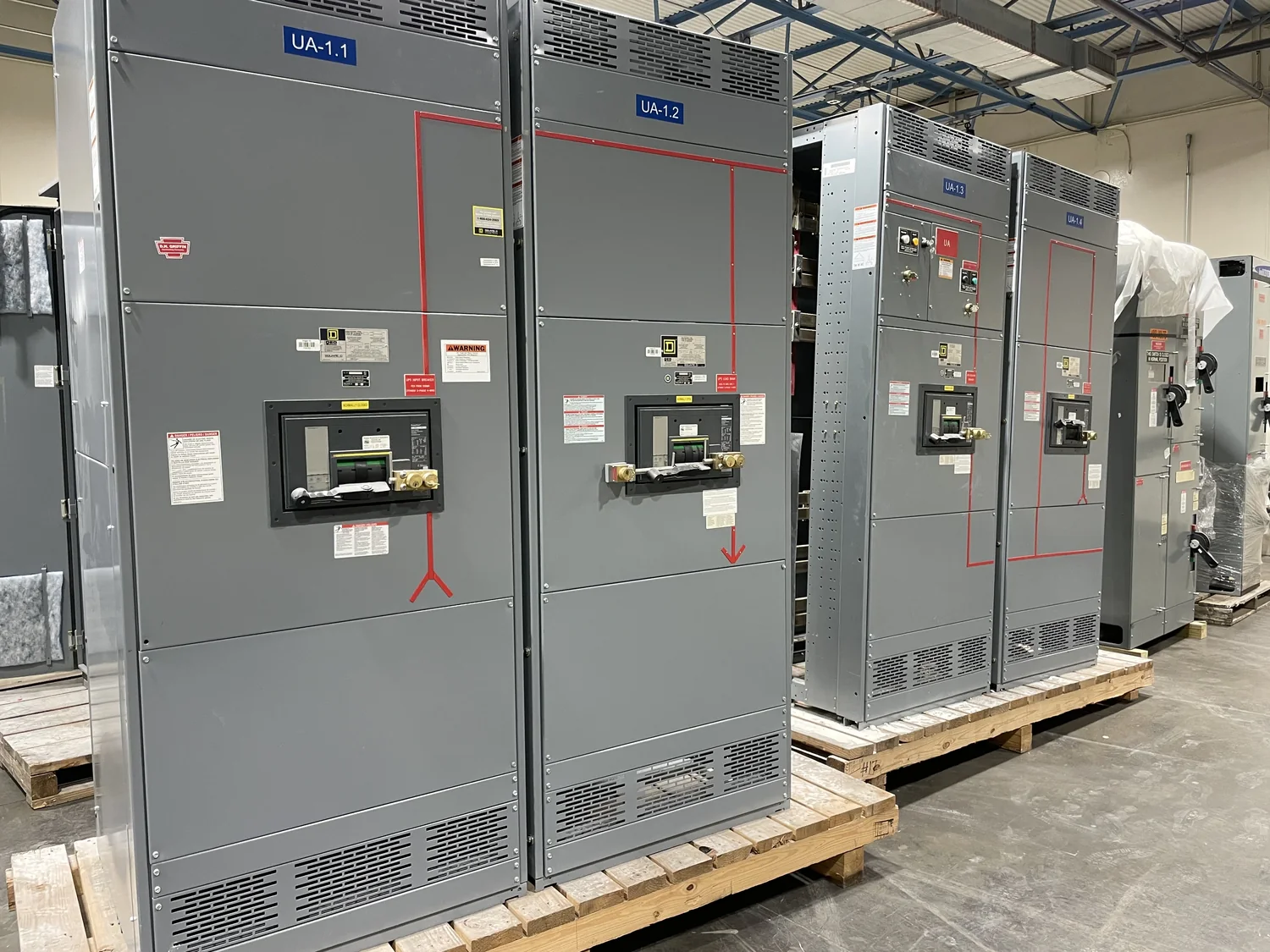
Retrofit Surplus Switchgear Purchase in the Washington, DC Region
If a facility in Washington, DC, Northern Virginia, or Maryland has switchgear left over from a retrofit, replacement, or equipment change, a purchase may be worth exploring before the equipment is treated as scrap. This is a buyer page: the business buys surplus switchgear and does not sell replacement equipment. A review starts with the actual assets, their condition and completeness, and whether they can be safely and practically removed from the site.
Retrofit work can leave behind complete lineups, sections, breakers, or related components, but the word “surplus” does not by itself establish what is available or what it is worth. Equipment may have been disconnected, partially dismantled, modified, or separated from accessories during a project. Share what remains and what is known rather than assuming every section or component has the same disposition. The buyer considers all voltage classes; a seller does not need to narrow the inquiry by voltage before making contact.
What to Gather Before Scope Is Set
Clear, well-lit photos help establish what equipment is present. If practical, photograph the lineup as a whole, each section, accessible nameplates, visible breakers and compartments, and any loose or separately stored components. Include close-ups of labels and identification plates so details can be read. Do not remove covers or enter restricted areas to take pictures. Follow the facility’s access and safety rules, and have qualified personnel obtain any images that require access to controlled electrical spaces.
Provide available nameplate information, such as manufacturer, model or catalog identifiers, rated voltage, current and interrupting information, and other legible ratings. These details support identification; they are not a substitute for review of the actual equipment. If a plate is missing, obscured, or unreadable, say so rather than guessing. Share the approximate lineup dimensions, including overall length, height, and depth where known, and note whether dimensions include extensions, barriers, or adjacent equipment that will remain in place.
A useful description also covers completeness and known condition. Identify which sections, breakers, doors, bus components, relays, accessories, or documentation are included, if known. Mention missing parts, visible damage, corrosion, storage conditions, or modifications. Do not conduct testing for the inquiry: seller-performed testing is not required. If existing inspection records or project documents are readily available, they may help explain what is included, but the review should not depend on the seller arranging new tests.
Ownership, Site Access, and Removal Planning
Confirm that the seller has authority to transfer the equipment and identify any ownership, lease, contractor, or project closeout questions that need resolution before removal. If several parties are involved, clarify who can approve the sale and who will coordinate access. A buyer’s interest in equipment does not settle ownership or authorize entry to a facility; those points should be established as part of the project arrangements.
Access details can shape whether and how removal is feasible. Share the site’s general location, the equipment’s position within the facility, available route and doorway clearances, loading-area arrangements, operating-hour limits, and any known restrictions on vehicles or lifting equipment. Note stairs, tight turns, low clearances, occupied areas, security procedures, or other constraints that could affect movement. For the DC region, coordination may also need to account for the facility’s own scheduling, access controls, and local delivery or loading conditions. These are planning considerations, not assumptions about a particular building or a promise of a specific pickup date.
Switchgear can be heavy and may be connected to electrical systems or installed in spaces with restricted access. Do not ask unqualified staff to disconnect, move, or handle it. De-energization, isolation, and all disconnect work must be performed by qualified personnel under the site’s safety rules and outage procedures. The timing and scope of that work should be coordinated with the facility and the project team; the buyer does not replace the site’s electrical or safety authority.
Removal Responsibilities and Payment
For an accepted purchase, the buyer handles the crane, rigging, disconnects, loading, freight, and hauling, subject to the project arrangements and site access. The parties should confirm responsibilities and the practical removal scope before work is scheduled. In particular, clarify what equipment is included, what must remain, who controls site access, how qualified disconnect work will be coordinated, and whether the agreed route and lifting plan can be accommodated. The equipment should not be treated as ready for removal until those details are addressed.
The buyer can make a cash offer after reviewing the information and the proposed scope. If an offer is accepted, payment is arranged upfront. That does not mean a price can be determined from the topic, voltage class, or a single photograph alone: the offer depends on review of the specific equipment and project details. No final price or removal plan should be assumed before that review and confirmation of responsibilities.
Request a Review of Your Surplus Equipment
To begin, send clear equipment photos, readable nameplate images, approximate lineup dimensions, and a list of sections and components believed to be included. Add the equipment’s general location in Washington, DC, Northern Virginia, or Maryland; confirmation of ownership or authority to sell; and a brief account of access, loading, timing, and removal constraints. Note whether the lineup is connected, already isolated, or in an unknown state, without attempting any electrical work to answer that question.
With those details, the buyer can assess whether the equipment fits a purchase inquiry and identify what else is needed to define the scope. Keep site safety, qualified-personnel requirements, and the facility’s outage procedures central to planning. A clear description up front helps both sides evaluate the asset and coordinate a responsible next step, without promising a particular price, acceptance, or schedule before the equipment and removal conditions are reviewed.