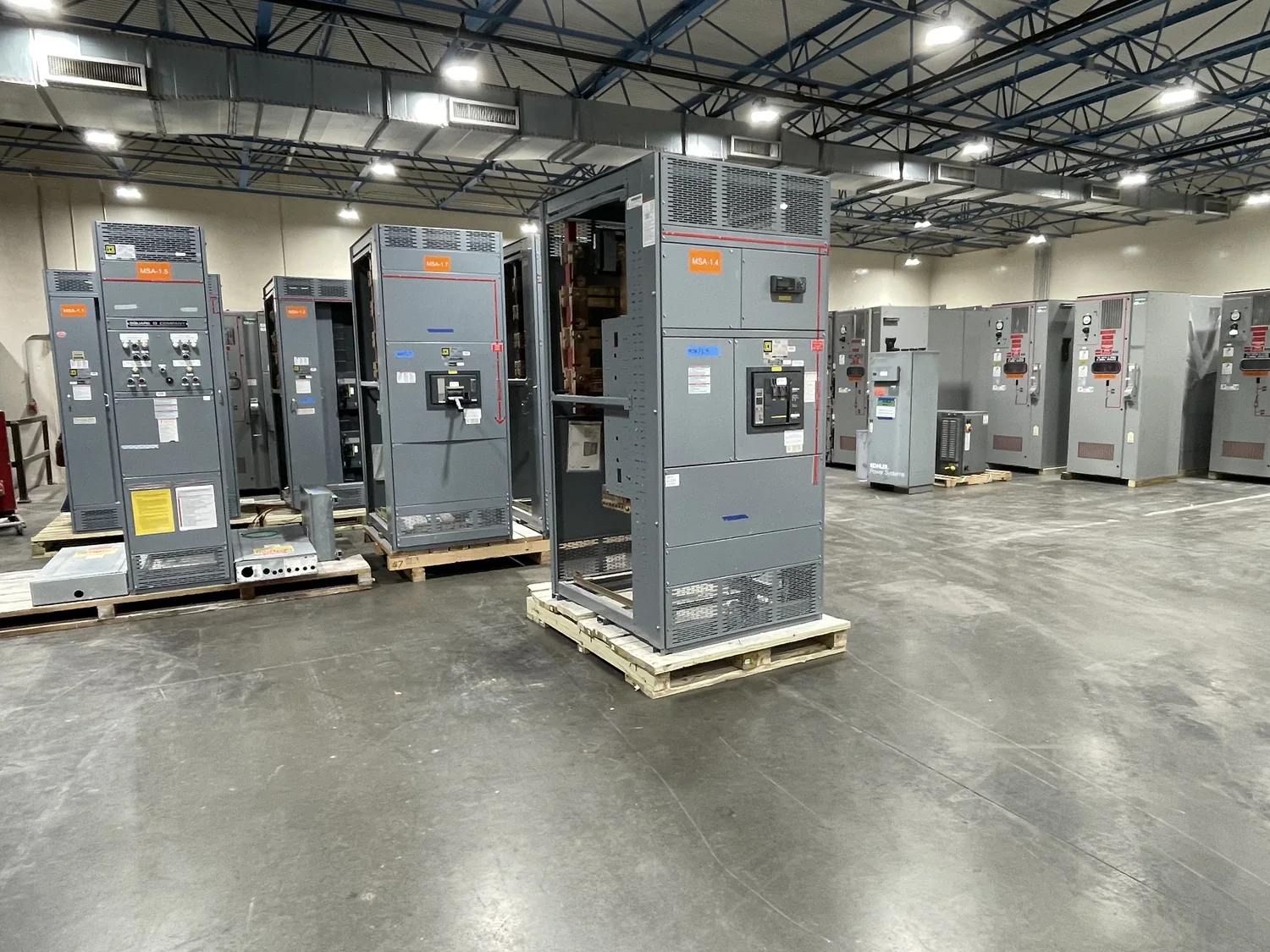
Switchgear Rigging Access Review in the Washington, DC Region
A switchgear rigging access review helps establish whether equipment can be safely and practically removed from a facility—and what information is needed before a removal plan or purchase offer can be considered. For sellers in Washington, DC, Northern Virginia, and Maryland, the review should account for the actual equipment, the building, the route from its installed location to the loading point, and the site’s scheduling and safety requirements. Access conditions vary from one property to another, so a regional service area should not be mistaken for a confirmed route, staging area, or available lift plan.
The buyer purchases equipment only; it does not sell switchgear. The buyer can make a cash offer after reviewing the asset information, and payment is arranged upfront if the offer is accepted. Sellers are not required to test equipment. The buyer handles crane, rigging, loading, freight, and hauling, subject to project arrangements and site access. Responsibilities, timing, and the removal scope should be confirmed for the particular project before work begins. No final price or removal plan should be assumed before the equipment and access details have been reviewed.
Start With Equipment Identification and Clear Photos
Provide clear, well-lit photos of the complete switchgear lineup and its surroundings. Useful views include the front, sides, rear where safely accessible, top or overhead obstructions, cable-entry areas, and the path toward the proposed exit and loading location. Close-up images of each available nameplate can help identify the equipment and its ratings. Include legible information such as manufacturer, model or type, serial number, voltage and current ratings, and other markings shown on the plate; do not infer missing data from appearance or provide specifications that have not been verified.
Share approximate overall lineup dimensions, including length, height, and depth, along with the number and arrangement of sections if known. Note whether the equipment is a complete lineup or whether sections, doors, panels, breakers, bus components, or other parts are absent, detached, or stored separately. Identify any visible damage or modification and whether accessories or documentation are included. Photos and dimensions support an initial review, but they do not replace a site-specific assessment. Do not open energized equipment or enter restricted areas to obtain information; follow facility rules and have qualified personnel provide access where needed.
Review the Route, Building, and Work Area
Rigging feasibility depends on more than the switchgear’s dimensions. The review may need the equipment’s installed floor or level, doorway and corridor clearances, turns, thresholds, stairs or ramps, overhead clearance, floor or loading limits as established by the site, and the distance to a suitable loading point. Describe elevators, narrow passages, security-controlled doors, nearby equipment, exterior approaches, and any restrictions on staging or vehicle access. Photos of the full route can help identify questions early, but the facility or its authorized representative must confirm conditions and access requirements.
In the DC region, project coordination may involve differing building procedures, operating hours, security processes, loading arrangements, and traffic or staging constraints. These should be treated as questions to confirm for the specific property—not as assumptions about a city, building, or facility. Share any known access windows, escort requirements, advance notice rules, loading-dock reservations, vehicle limits, parking or staging restrictions, and blackout dates. If a crane or other lifting arrangement might be needed, the site and project team must evaluate available setup space, overhead conditions, reach, and any site restrictions before the method is settled.
Confirm Ownership, Disconnection, and Removal Responsibilities
Before a purchase or removal scope is set, provide the seller’s ownership or authority to sell and identify any other party whose approval is required. Explain whether the switchgear is still installed, whether it is connected to other equipment, and what the site requires before it can be removed. Ownership and authorization matter independently of physical access; a review of photographs alone does not establish the right to transfer the asset.
De-energization, isolation, and all disconnect work must be performed by qualified personnel under the facility’s safety procedures and outage requirements. Do not ask unqualified staff to disconnect, move, or handle electrical equipment. Coordinate the responsible personnel, required approvals, outage timing, and work sequence with the site before scheduling removal. The buyer handles crane, rigging, loading, freight, and hauling, subject to agreed project arrangements and site access; the buyer does not take over the facility’s electrical safety responsibilities. Confirm in advance who is responsible for any site-controlled preparation or work that falls outside the buyer’s removal activities.
What to Send Before Scope and Scheduling Are Set
For an initial review, send the equipment photos and nameplates, approximate lineup dimensions, known ratings, an inventory of included and missing components, and a brief description of the installation and access route. Add the facility location within Washington, DC, Northern Virginia, or Maryland; the seller’s ownership or authorization information; a site contact; access and scheduling restrictions; and any known crane, loading, or removal constraints. If details are not known, say so rather than guessing. The buyer can then identify follow-up questions and consider the equipment for a cash offer without requiring seller testing.
An offer, payment timing, removal scope, and schedule remain subject to review and project arrangements. If the offer is accepted, payment is arranged upfront. Before removal, confirm the site’s access conditions and the agreed responsibilities for crane, rigging, loading, freight, hauling, and any required coordination with facility personnel. A careful access review helps the parties plan around real equipment and site conditions, while leaving final pricing, removal methods, and timing to project-specific confirmation.