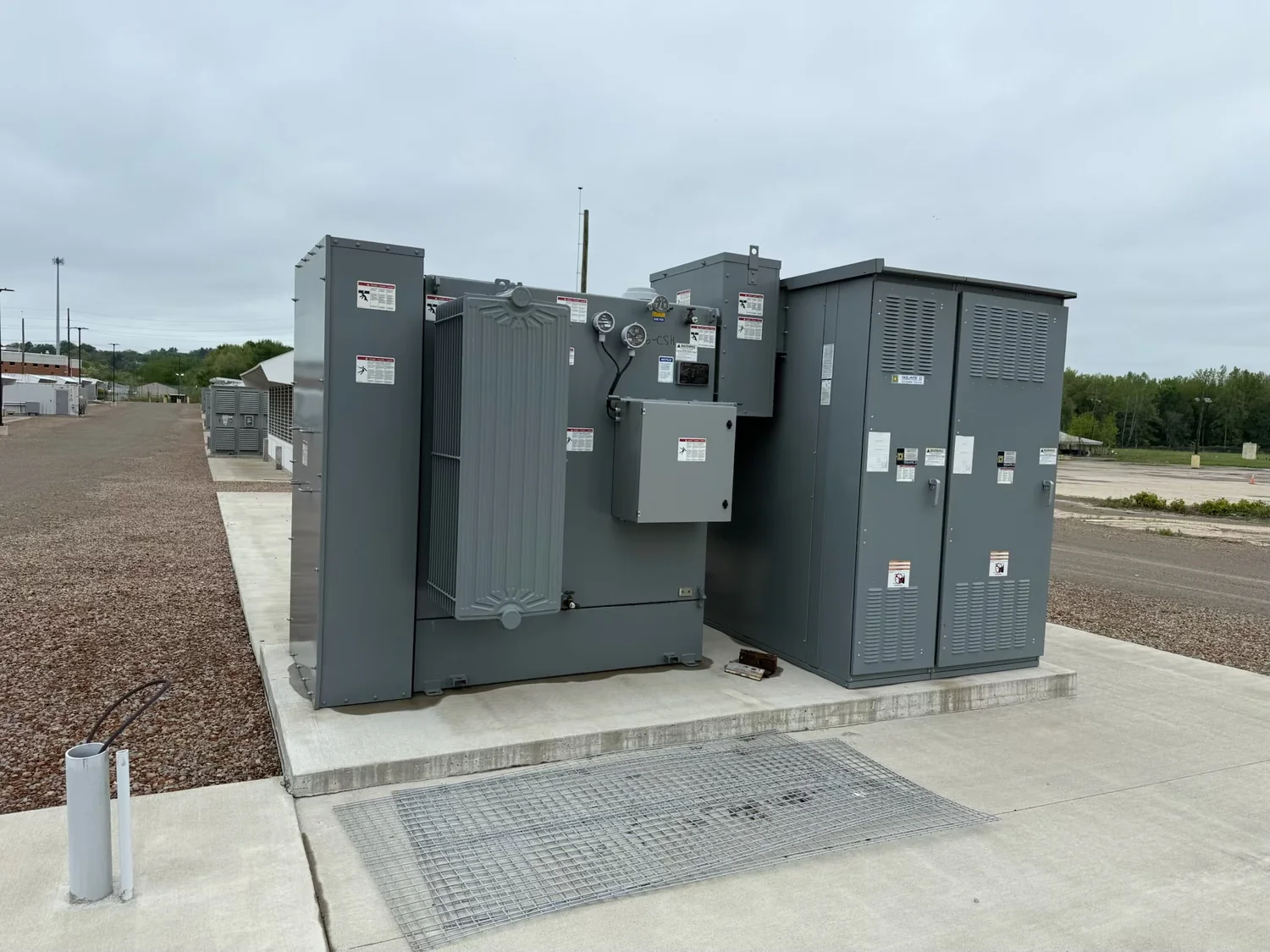
Switchgear Seller Upfront Payment Guide
If your organization is considering selling switchgear in the Washington, DC region, upfront payment can make the transaction easier to plan—but the payment terms and removal scope should be clear before equipment is moved. This guide explains how a buyer evaluates a potential purchase, what information to prepare, and how payment and logistics can be coordinated for equipment in Washington, DC, Northern Virginia, or Maryland.
The buyer purchases equipment; it does not sell switchgear. A seller can request a cash offer, and if the offer is accepted, payment is arranged upfront. The equipment does not need to be tested by the seller. The buyer considers all voltage classes, but that does not mean every item will receive an offer: equipment, completeness, ownership, condition information, project timing, and removal feasibility all require review. No final price can be established from a general description alone.
What to Send for an Initial Review
Start with clear photographs of the switchgear as it is installed and, where practical, of each accessible section. Include wide views showing the lineup in context, closer views of the front and sides, and images of any visible damage, missing covers, disconnected sections, or loose components. Do not open energized compartments or remove barriers to obtain photographs. Follow site safety rules and have qualified personnel determine what areas can be photographed safely.
Send readable nameplate photographs for the lineup and individual sections when available. Useful information may include manufacturer and model identification, ratings, catalog or serial numbers, and other legible nameplate details. The buyer considers all voltage classes, so sellers need not exclude equipment because of its voltage. Do not infer ratings from appearance or assume that adjacent sections share identical specifications; provide what is actually documented and let the buyer review it.
Provide the overall lineup length, approximate height and depth, and the dimensions of any separate sections or major components. Note whether the lineup appears to be one assembly or divided into shipping sections, and identify anything that could affect safe removal or transport. Measurements help assess handling and freight planning, but they do not replace a site review when access, weight, lifting points, or the removal path is uncertain.
Describe completeness as accurately as possible. Mention whether breakers, buckets, relays, control components, doors, bus components, or accessories are present, missing, stored separately, or of unknown status. Include available drawings, inventories, prior removal records, or other documentation if you have them. Do not represent equipment as complete or operational unless you can support that description; seller testing is not required, and a lack of testing should simply be stated.
Ownership, Access, and DC-Region Scheduling
Confirm who owns the equipment and who is authorized to approve its sale and removal. If the switchgear is part of a leased, financed, managed, or otherwise controlled facility, identify any approvals or coordination steps that may affect the transaction. The buyer needs enough information to understand the seller’s authority to transfer the equipment before scope and timing are set.
For a project in Washington, DC, Northern Virginia, or Maryland, provide the site location and practical access information without assuming that every building or facility has the same constraints. Relevant details may include delivery or loading entrances, floor level, corridor and doorway clearances, elevator or dock availability, parking or staging limitations, restricted work hours, security or escort procedures, and any known limits on truck or equipment access. Explain whether the proposed route from the switchgear to the loading point has tight turns, stairs, uneven surfaces, or other obstacles.
Scheduling should be coordinated around the site’s operating needs, access rules, outage windows, and removal plan. Share known deadlines, required advance notice, building or facility coordination requirements, and any limits on when crews or vehicles can be on site. These details help determine whether a proposed removal plan is practical; they are not a promise of a particular schedule. The buyer and seller should confirm the scope, responsibilities, timing, and access arrangements before removal begins.
Upfront Payment and Removal Responsibilities
A seller may request a cash offer based on the information provided and the buyer’s review. If the seller accepts the offer, payment is arranged upfront. Confirm the agreed payment amount, timing, payment method, equipment included, and any conditions in writing before authorizing removal. An initial estimate or discussion is not a final price, and no price should be treated as final until the buyer has reviewed the specific equipment and relevant project details.
The buyer handles the crane, rigging, disconnects, loading, freight, and hauling, subject to project arrangements and site access. The parties should confirm how each task will be coordinated, what equipment can be used at the site, and who must provide access or approvals. The buyer pays the crane, rigging, loading, freight, and hauling costs, with responsibilities confirmed before removal. Clarify the scope in advance so there is no confusion about which equipment is included, what will be taken, or how the site must be left.
Electrical equipment must not be disconnected or handled by unqualified personnel. De-energization, isolation, and disconnect work must be carried out by qualified personnel under the site’s safety procedures and outage requirements. Coordinate the responsible parties, sequence, access, and timing for this work as part of the project plan. The buyer’s responsibility for disconnect coordination does not replace the site’s safety controls or authorize anyone to perform work outside their qualifications.
A Practical Seller Checklist
Before requesting an offer, gather equipment photos, readable nameplates, approximate lineup and section dimensions, available documentation, a candid summary of completeness, confirmation of ownership or sale authority, and site access details. Identify known removal constraints and scheduling requirements, including outage coordination and any site rules that may affect crews, lifting equipment, trucks, or staging. If information is unavailable or uncertain, say so rather than guessing.
Then ask the buyer to review the equipment and confirm the proposed scope, cash offer, upfront payment arrangement, removal responsibilities, and project timing. Provide an opportunity to address questions before the offer is accepted and removal is scheduled. Clear information does not guarantee a particular offer or outcome, but it helps both sides evaluate the asset and plan a safer, more workable removal for a Washington, DC-area project.