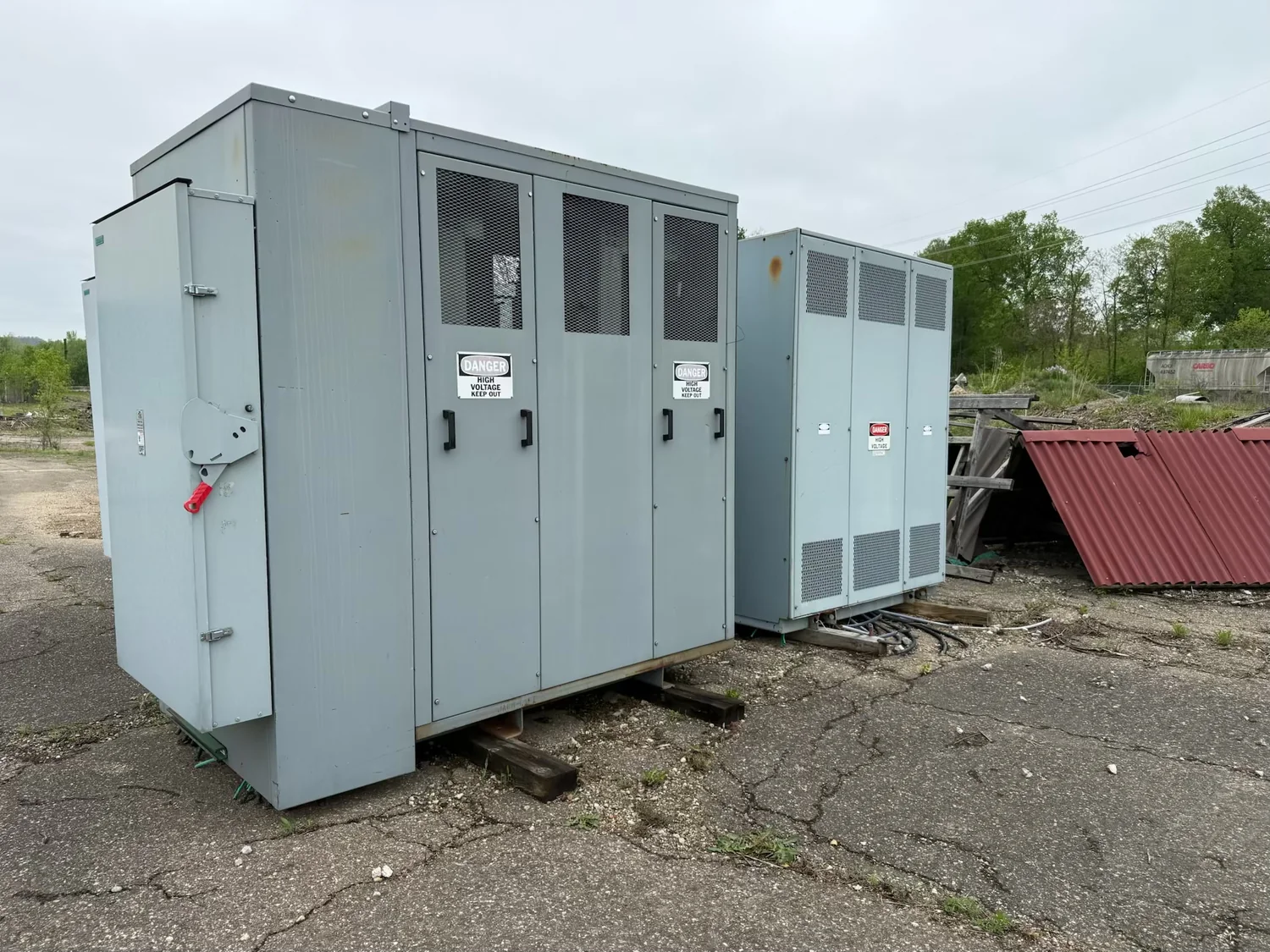
Switchgear Storage Yard Clearout in the Washington, DC Region
A storage yard clearout can involve a single switchgear lineup, loose sections, spare breakers, or a mixed group of electrical assets accumulated over time. Before removal is planned, the buyer needs enough information to understand what is present, who owns it, how it can be accessed, and what the site requires for a safe and orderly pickup. This guide is for businesses and other equipment owners in Washington, DC, Northern Virginia, and Maryland considering a sale of stored switchgear.
The buyer purchases equipment only; it does not sell or install switchgear. It considers all voltage classes, and the seller does not need to test equipment before requesting consideration. A cash offer may be made after review, and if the offer is accepted, payment is arranged upfront. Price and scope depend on the equipment and project details, so a final offer should not be assumed before the buyer has reviewed the available information.
Start with Photos, Nameplates, and a Clear Inventory
Send clear, well-lit photos of each lineup and its sections, including exterior views, doors, visible compartments, loose components, and any accessories stored separately. Photos that show the equipment in context can help the buyer assess how it is arranged in the yard and whether it appears to be grouped with other assets. Avoid opening compartments or approaching equipment to take pictures if doing so would conflict with site rules or expose anyone to electrical or physical hazards.
Include readable nameplate photographs where they can be taken safely. Depending on the equipment, useful details may include manufacturer identification, catalog or model information, serial numbers, ratings, and other markings shown on the plate. Do not infer missing specifications from appearance or rely on a partial label when a clearer image may be available. The buyer considers all voltage classes, but the actual identification and configuration still matter when reviewing a particular group of equipment.
Provide an inventory if one exists, and distinguish complete lineups from loose sections, breakers, mechanisms, or other parts. Note whether components are believed to be included with a particular lineup, stored separately, or of uncertain association. Completeness can affect the review and the removal plan; a lineup with missing sections or detached components should be described accurately rather than presented as complete. No seller testing is required, and the buyer’s review should not be treated as a substitute for inspection or condition documentation required for the seller’s own records.
Dimensions, Ratings, Ownership, and Yard Conditions
Share the lineup’s approximate overall dimensions and the dimensions of unusually large or separate sections when available. Length, height, depth, section count, and any known shipping or lifting information can help establish whether the equipment can be moved as one assembly or whether removal may need to be planned in sections. Provide equipment ratings and nameplate details where visible, but do not guess at ratings that cannot be confirmed from the equipment or records.
Clarify ownership and authority to sell before scope is set. If the equipment belongs to a business, landlord, contractor, or another entity, identify who can approve the sale and coordinate access. Note any known liens, disputed ownership, third-party storage arrangements, or limits on the seller’s authority so these questions can be resolved before removal planning proceeds. The buyer needs a clear understanding of what assets are included in the proposed sale, especially when multiple owners or separate equipment groups share a yard.
Describe the yard and access conditions without assuming that every site can accommodate the same equipment or vehicles. Relevant details may include gate width and height, turning room, ground conditions, overhead or nearby obstructions, distance from the pickup point to a loading area, and whether access is restricted to certain hours. Also identify security check-in, escort, insurance-document, loading-zone, or scheduling requirements that the site has communicated. These details help the parties determine whether the proposed pickup method and timing are workable; they do not establish a guaranteed removal date.
Removal Planning, Safety, and Regional Scheduling
The buyer handles crane, rigging, disconnects, loading, freight, and hauling, subject to project arrangements and site access. Responsibilities, scope, timing, and any site-specific coordination should be confirmed before removal. The buyer’s responsibility for these logistics does not remove the need to coordinate with the facility about access, work windows, vehicle routes, loading areas, or any conditions that could affect the plan.
All de-energization, isolation, and disconnect work must be performed by qualified personnel under the site’s safety procedures and applicable outage requirements. Do not ask unqualified staff to disconnect, open, move, or handle switchgear. The seller and site representatives should coordinate the required outage and release conditions with the qualified personnel responsible for the equipment. Confirm that the equipment is ready for the planned work before the scheduled removal; access to energized or restricted areas must follow the site’s controls.
For equipment in the Washington, DC region, travel and scheduling can involve different jurisdictions, facility rules, and site-specific access arrangements across the District, Northern Virginia, and Maryland. Share the location and preferred work windows early, along with any limits on truck access, staging, escorts, or permitted pickup hours set by the site. Do not assume a particular local route, facility capability, or regional scheduling rule. The removal plan should be based on the actual site, the equipment, and the arrangements confirmed by the parties.
Offer Review and What to Confirm Before Pickup
Once the buyer has reviewed the photos, nameplates, dimensions, inventory, ownership information, and access details, it can assess whether to make an offer and define the proposed scope. An offer is not final until the relevant equipment and arrangements have been reviewed. If accepted, payment is arranged upfront. Confirm the payment timing and the assets covered by the offer before authorizing removal, and keep the agreed scope clear if the yard contains equipment that is not part of the sale.
Before pickup, confirm which sections and loose components are included, who will provide site access, the expected work window, and how required disconnection and release will be coordinated. Also confirm the planned approach for crane and rigging access, loading, freight, and hauling, taking into account actual site conditions. If the inventory or condition differs materially from the information first provided, pause to review the change rather than assuming the original scope still applies.
A useful initial submission includes overall and detail photos, readable nameplates where safely accessible, approximate lineup dimensions, known ratings, a list of included and excluded assets, proof of authority to sell, and a description of yard access and removal constraints. That information gives the buyer a practical basis for evaluating a switchgear storage yard clearout without requiring seller testing or an unsupported guess about value, timing, or feasibility.