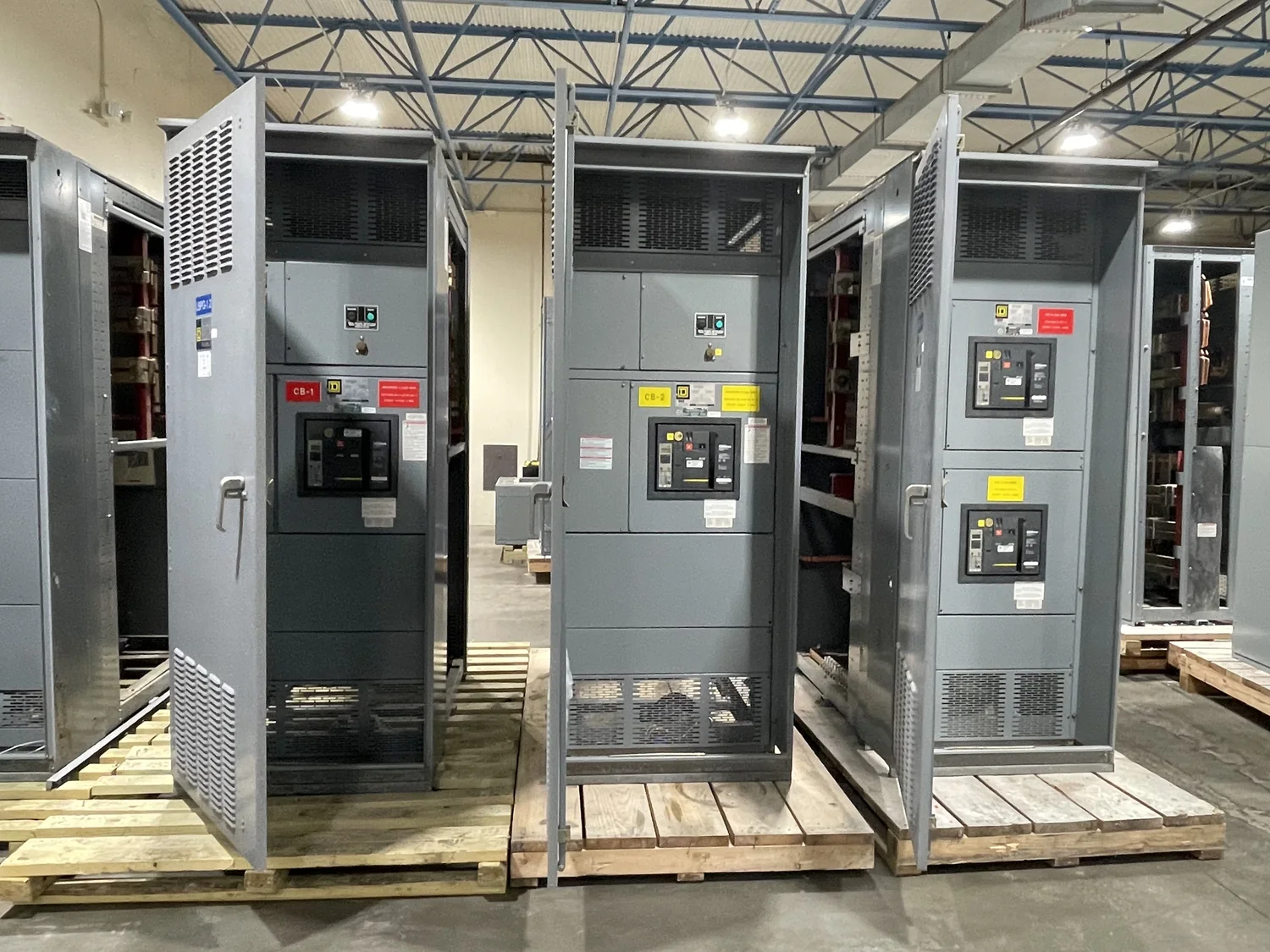
Switchgear removal starts with a clear scope
A vacant site can make switchgear removal easier to schedule, but vacancy alone does not establish that equipment is safe to access or ready to move. The lineup may remain connected to a utility, another building, temporary power, control circuits, or equipment that is still in service. Before removal is planned, the site owner or authorized representative should confirm what the switchgear serves, who controls the relevant electrical systems, and what site safety and outage procedures apply.
For sellers in Washington, DC, Northern Virginia, and Maryland, the practical first step is to share enough information for the buyer to assess the equipment and the proposed removal. Send clear photos of the complete lineup, its interior where safely accessible, nameplates, visible damage, and the surrounding room or outdoor setting. Include approximate lineup dimensions, the number of sections, known ratings and voltage class, and any information about missing doors, breakers, relays, bus components, or other parts. Consideration is given to all voltage classes; the voltage class helps describe the asset but does not by itself determine an offer or removal plan.
The buyer reviews the information before setting the scope. Photos and preliminary measurements are useful, but they are not a substitute for confirming actual dimensions, completeness, ownership, access, and removal constraints. No final price can be responsibly established from a title or a general description alone. A site visit or additional documentation may be useful if the lineup is large, incomplete, difficult to reach, or not clearly identified.
Document ownership, configuration, and condition
Include readable nameplate images for each lineup or major section when available. Useful details may include manufacturer and model identifiers, serial numbers, voltage and current ratings, interrupting or withstand ratings if shown, and dates or other markings. These details help distinguish sections and clarify what is being offered. Do not rely on a nameplate alone: provide wide-angle photos that show how sections are arranged, close-ups of visible components, and a list of known missing or removed items. Do not open energized equipment or remove covers to obtain photos; arrange any inspection through qualified personnel and the site's safety procedures.
State whether the equipment is complete, partially dismantled, stored, or still installed. If breakers, relays, meters, control power components, bus links, or accessories have been removed, identify what remains and whether those items are included in the proposed sale. Disclose known water exposure, fire damage, corrosion, impact, contamination, or other conditions that may affect evaluation or handling. Seller testing is not required. The buyer may assess the information provided and determine whether further review is needed, but the seller should not perform testing or inspection work that is outside their authorization or qualifications.
Confirm that the person or business offering the switchgear has authority to transfer ownership. If the asset belongs to a landlord, lender, utility, tenant, contractor, or another party, identify who can approve the sale and removal. Ownership and access permission are separate questions: the buyer also needs to know who can authorize entry, coordinate with the property manager, and approve work in the removal area. Clear documentation at the outset can prevent avoidable delays when a vacant facility has limited on-site representation.
Plan disconnects and safe access before removal
A vacant building is not necessarily de-energized. Electrical sources, stored energy, control wiring, backfeeds, and connections to adjacent systems may still be present. De-energization, isolation, verification, and disconnect work must be performed by qualified personnel under the site's safety and outage procedures. Do not ask unqualified staff, a prospective buyer, or a hauling crew to disconnect electrical equipment. Coordinate the responsible electrical personnel, approvals, work boundaries, and timing before any removal date is set.
The seller and site representative should explain whether the switchgear is connected, whether it has already been disconnected by qualified personnel, and what documentation or site process governs access. Identify restricted areas, required escorts, security check-in, operating-hour limitations, loading-zone rules, and any coordination needed with a utility or neighboring occupant. These details are especially important for urban and shared-use properties in the DC region, where a removal route may depend on access through a building, a controlled service area, or a limited staging location. Do not assume any particular site condition; describe the actual constraints and confirm them with the responsible site contact.
The removal plan also depends on physical conditions: doorway and corridor clearances, stairs or elevators, floor loading limitations, overhead obstructions, turning space, distance to the loading point, and the surface and approach available to vehicles or lifting equipment. Provide measured dimensions where possible, along with photos of the route from the lineup to the exit and loading area. Note whether sections are assembled or already separated, and identify any anchoring, overhead bus, conduit, or structural features that may affect removal. These observations help determine whether the lineup can be moved in sections and what equipment and sequence may be appropriate.
Coordinate lifting, loading, and transportation
For an accepted transaction, the buyer handles the crane, rigging, loading, freight, and hauling, subject to project arrangements and verified site access. The buyer also coordinates the removal logistics with the seller or authorized site contact so responsibilities, timing, equipment, and access expectations are clear before work begins. The exact arrangements must be confirmed for the project; do not assume a particular crane type, crew size, removal date, or route before the equipment and site have been reviewed.
Tell the buyer about known restrictions on truck size, delivery or pickup hours, street or dock access, staging, parking, weight limits, and the availability of a loading area. Share any building or property rules that may affect lifting or transport. If a crane or other lifting equipment may be required, the lift location, reach, overhead clearance, ground conditions, and nearby obstacles can matter. The buyer's responsibility for the specified removal and transport costs does not eliminate the need to confirm that the planned work can be performed with available access and within the site's approved procedures.
The equipment's weight and dimensions should be verified rather than guessed. Provide manufacturer data or section weights when available, and distinguish documented figures from estimates. If exact weights are unavailable, say so; the buyer can review what additional information is needed before finalizing the handling plan. Identify loose parts and whether they are contained, labeled, and included. A complete and accurate description supports safer planning and helps avoid discrepancies between the equipment reviewed for an offer and what is present at pickup.
Offer, payment, and removal arrangements
After reviewing the equipment information, ownership and access details, and the likely removal constraints, the buyer can make a cash offer for consideration. An offer is not guaranteed by the fact that the site is vacant or that switchgear is present; it depends on review of the specific equipment and project conditions. If the offer is accepted, payment is arranged upfront. Confirm the agreed payment timing and the removal scope before the work is scheduled, and ensure the person accepting the offer has authority to act for the owner.
The buyer buys equipment and does not sell switchgear. The seller does not need to test the equipment to request an evaluation. Before removal, both sides should confirm in writing what equipment and components are included, who will provide site access, which qualified personnel will handle any required disconnect work, the planned removal window, and how crane, rigging, loading, freight, and hauling responsibilities apply to the project. Any conditions that could change the scope—such as inaccessible sections, unreported missing components, or a route that cannot accommodate the planned move—should be surfaced and resolved before work proceeds.
To begin, send clear equipment and nameplate photos, approximate lineup dimensions, known ratings, a brief completeness and condition description, proof or confirmation of sale authority, and the name of the person coordinating site access. Add photos and details of the removal route, loading point, scheduling limits, and any known disconnect status. With those facts in hand, the buyer can review the opportunity, discuss an offer, and coordinate a practical removal plan for a vacant site in Washington, DC, Northern Virginia, or Maryland without assuming site conditions that have not been verified.